
Topkapı Palace
The sultans’ palace on Sarayburnu: courtyards, the Imperial Council, the treasury and the terraces over the water. Dated entry, sold online on its own site.
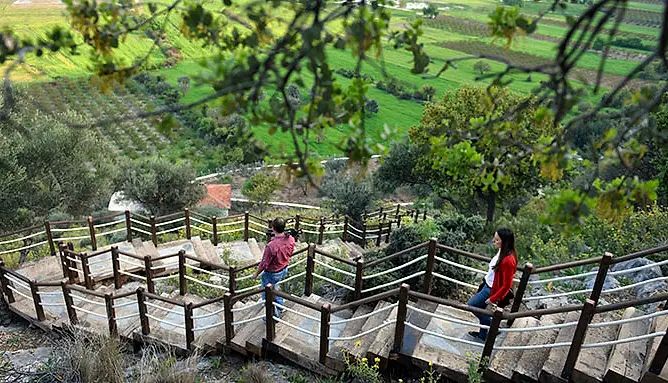
One of Türkiye's largest natural caves near Antalya, with a 500,000-year record of human life from the Palaeolithic to Roman times and a museum beside it.
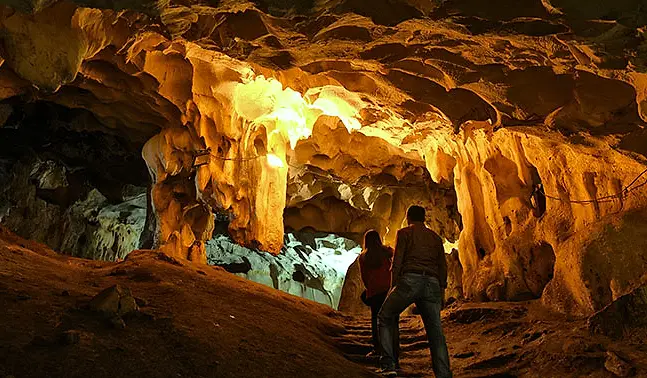
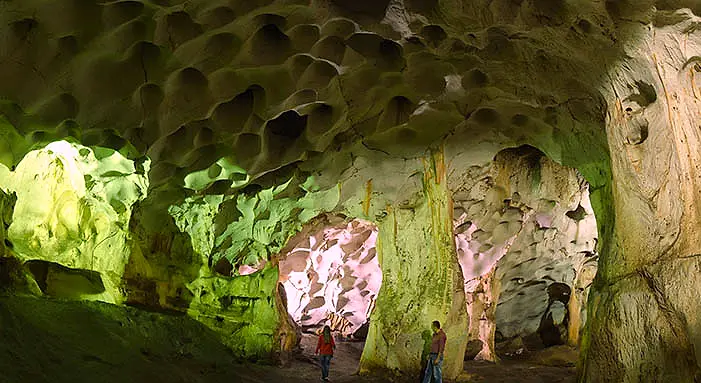
Karain Cave is among the largest natural caves in Türkiye, 430-450 metres above sea level, in the territory of Yağca village about 30 km north-west of Antalya. Excavations have run since 1946. They show that people were living here around 500,000 years ago, making it the largest cave inhabited by humans in Türkiye and an important Palaeolithic centre for Anatolia and the Near East.
The cave gives an unbroken record of the Lower, Middle and Upper Palaeolithic and was still used up to Roman times, leaving a cultural layer 11 metres deep. Finds include stone and bone tools, beads and some of the earliest examples of Anatolian art. Bones of rhinoceros, elephant and hippopotamus, species no longer found in Anatolia, have been recovered. Plant and animal remains also help show the ancient environment of the western Mediterranean.
Some finds are shown in the Karain Museum next to the cave, and others in Antalya Museum. Votive inscriptions on the outer walls from the Roman period suggest the cave was used to worship a mountain goddess. The cave also draws attention for stalactites and stalagmites formed over hundreds of thousands of years, and it is on the UNESCO World Heritage Tentative List.
According to the Ministry’s listing it opens at 08:00 and closes at 19:30 (last entry 19:00). Open every day.
No. This site sells no tickets. Topkapı Palace, the Basilica Cistern, Hagia Sophia and Dolmabahçe Palace are sold on our sister sites; for Karain Cave, buy at the ticket office or on the Ministry’s official e-ticket system.
Karain Cave is in Antalya, Türkiye — Yağca Mahallesi.
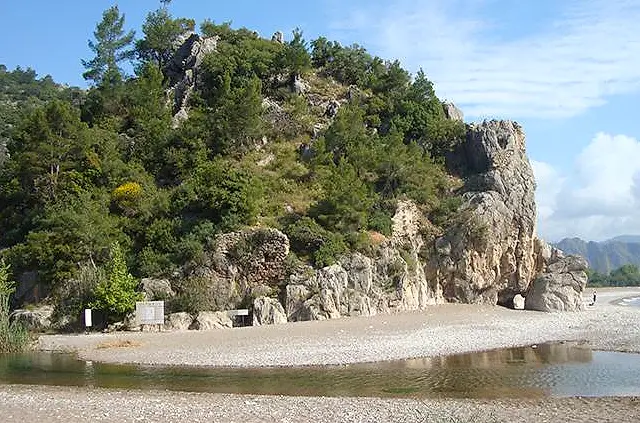
A Lycian coast city hidden in a wooded valley beside a beach, once a pirates' haven, with a theatre, a Byzantine church and the eternal flames of Chimaera nearby.
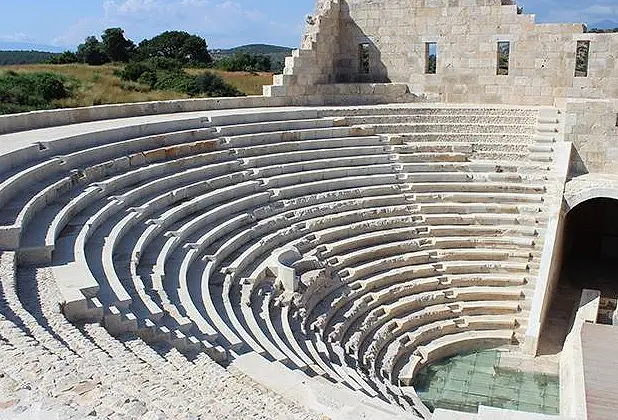
Capital of the Lycian League and birthplace of St. Nicholas, on a coast beside one of Turkey's longest beaches, with a lighthouse, a parliament house and an oracle tradition.
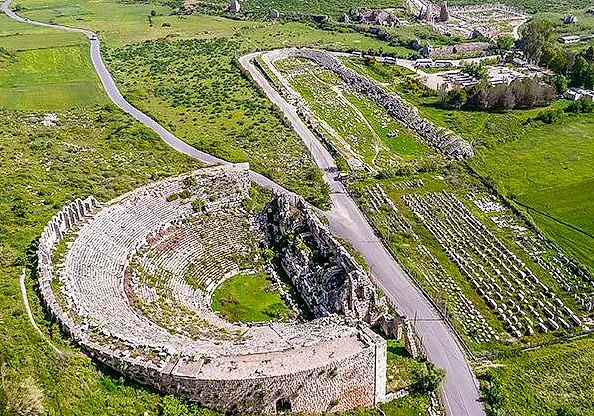
One of Turkey's best-preserved Roman cities, on a plain east of Antalya, with a Hellenistic gate, colonnaded streets, theatre and stadium.
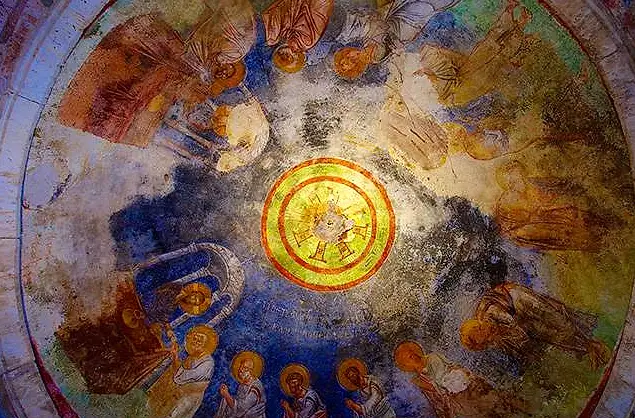
The church at Demre (ancient Myra) built over the tomb of St. Nicholas, the bishop who became the model for Santa Claus, with frescoes and an audio guide.
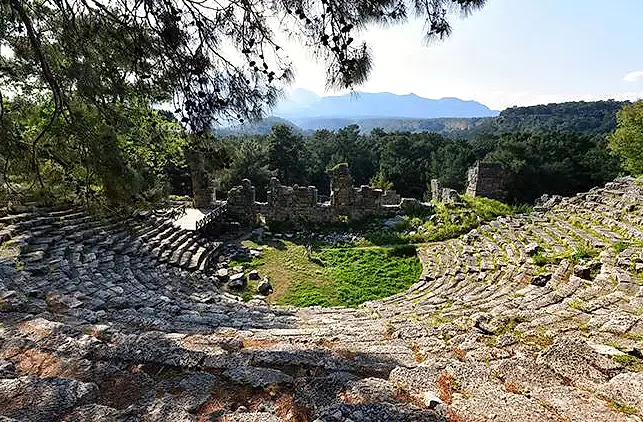
A trading city on a pine-covered peninsula with three harbours, visited by Emperor Hadrian and Alexander the Great, and known for its water-supply engineering.
Four Istanbul landmarks, each sold on its own site by the agency behind this guide — dated entry and free cancellation up to 24 hours.
The sultans’ palace on Sarayburnu: courtyards, the Imperial Council, the treasury and the terraces over the water. Dated entry, sold online on its own site.
Justinian’s great underground reservoir: 336 columns in still water and the two Medusa heads. Fast-track entry with a digital audio guide.
Justinian’s cathedral, the sultans’ mosque and a working mosque again today. The ticket admits you to the upper visitor gallery.
A nineteenth-century palace on the water’s edge: the Selamlık, the Ceremonial Hall under its chandelier, the crystal staircase and the Harem.


