
Topkapı Palace
The sultans’ palace on Sarayburnu: courtyards, the Imperial Council, the treasury and the terraces over the water. Dated entry, sold online on its own site.

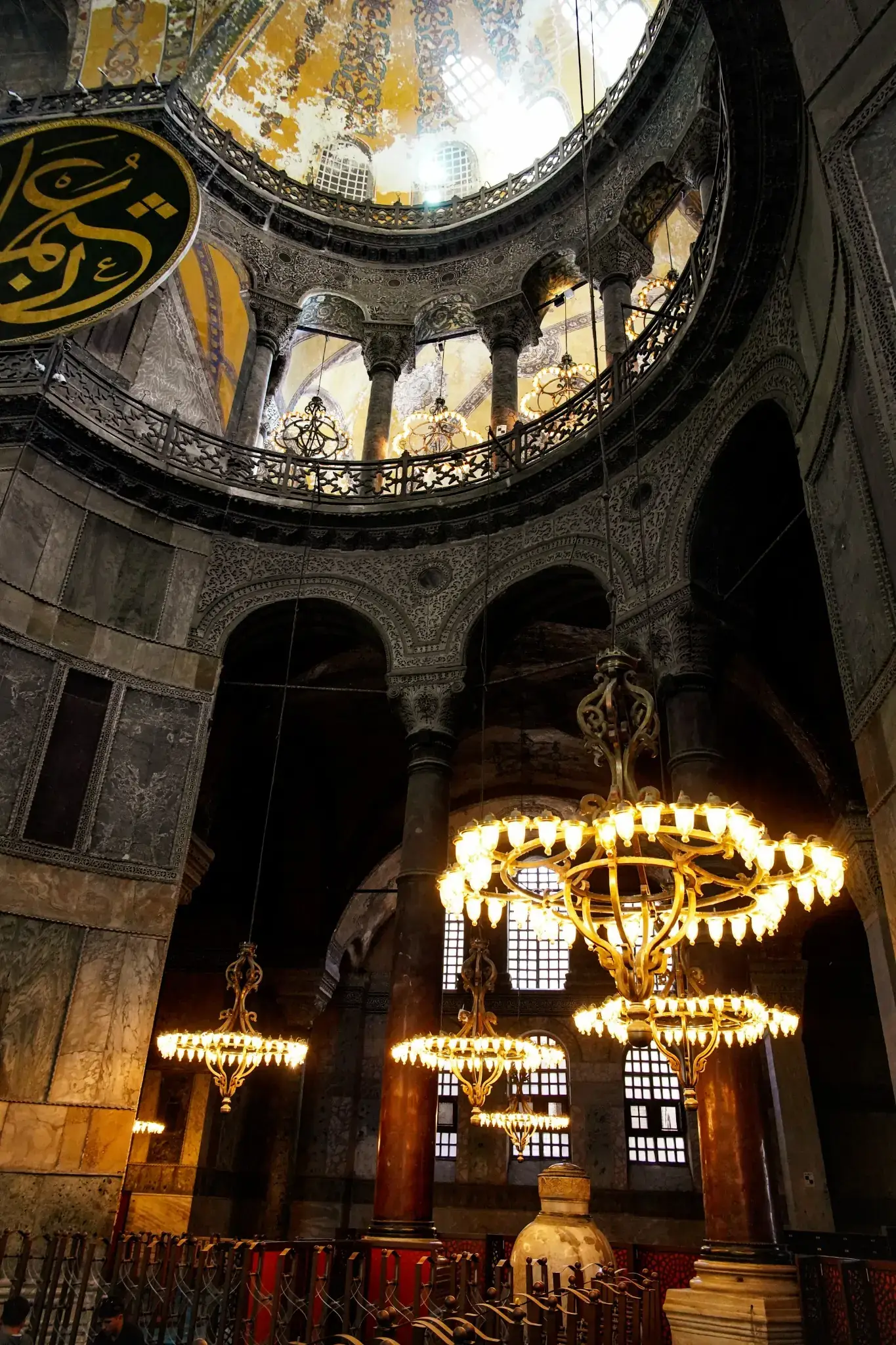
Completed in 537, Hagia Sophia was the largest church in Christendom for almost a thousand years, then one of the great imperial mosques of the Ottoman capital. Its dome still seems to float on a ring of light.
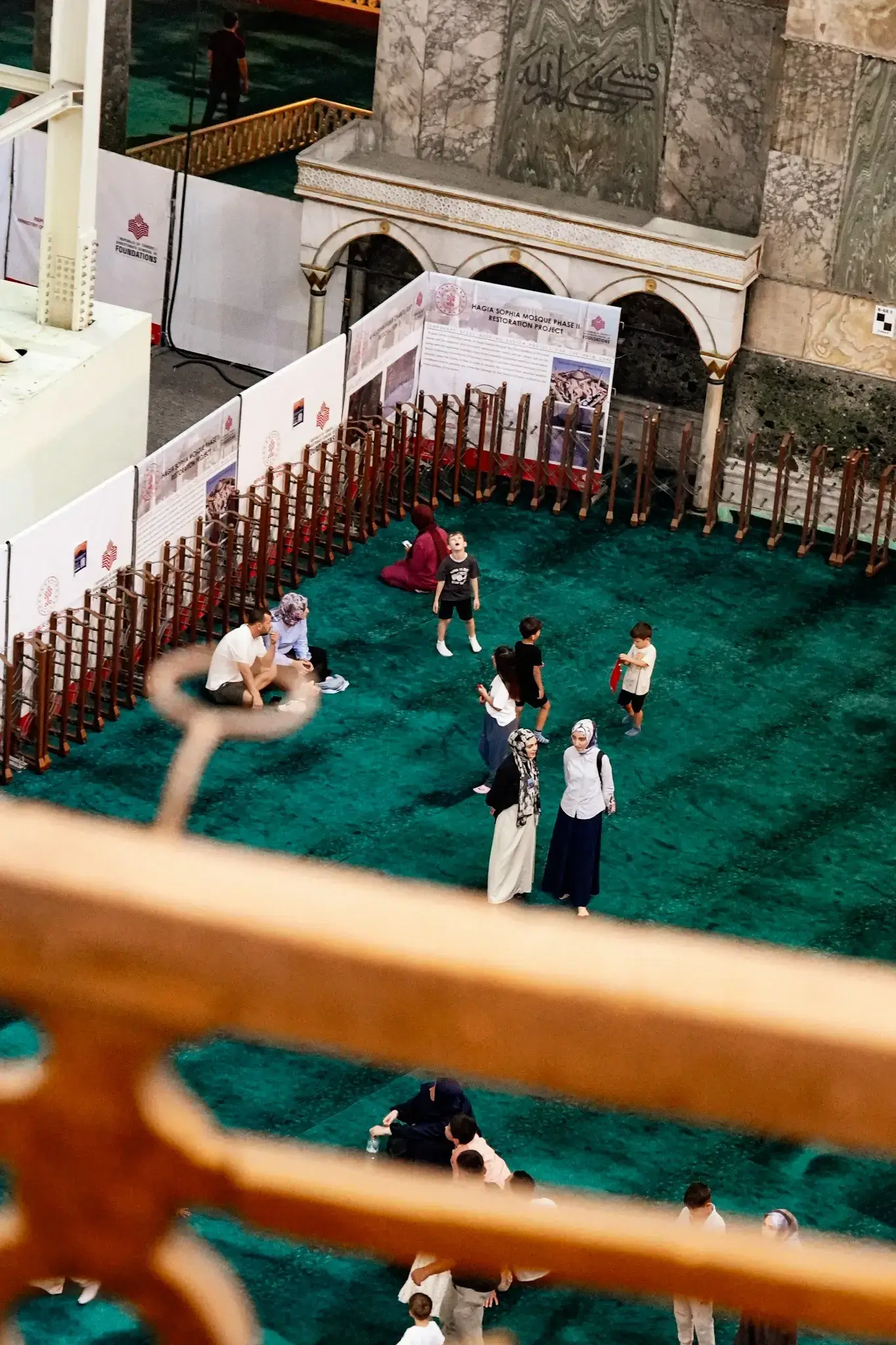
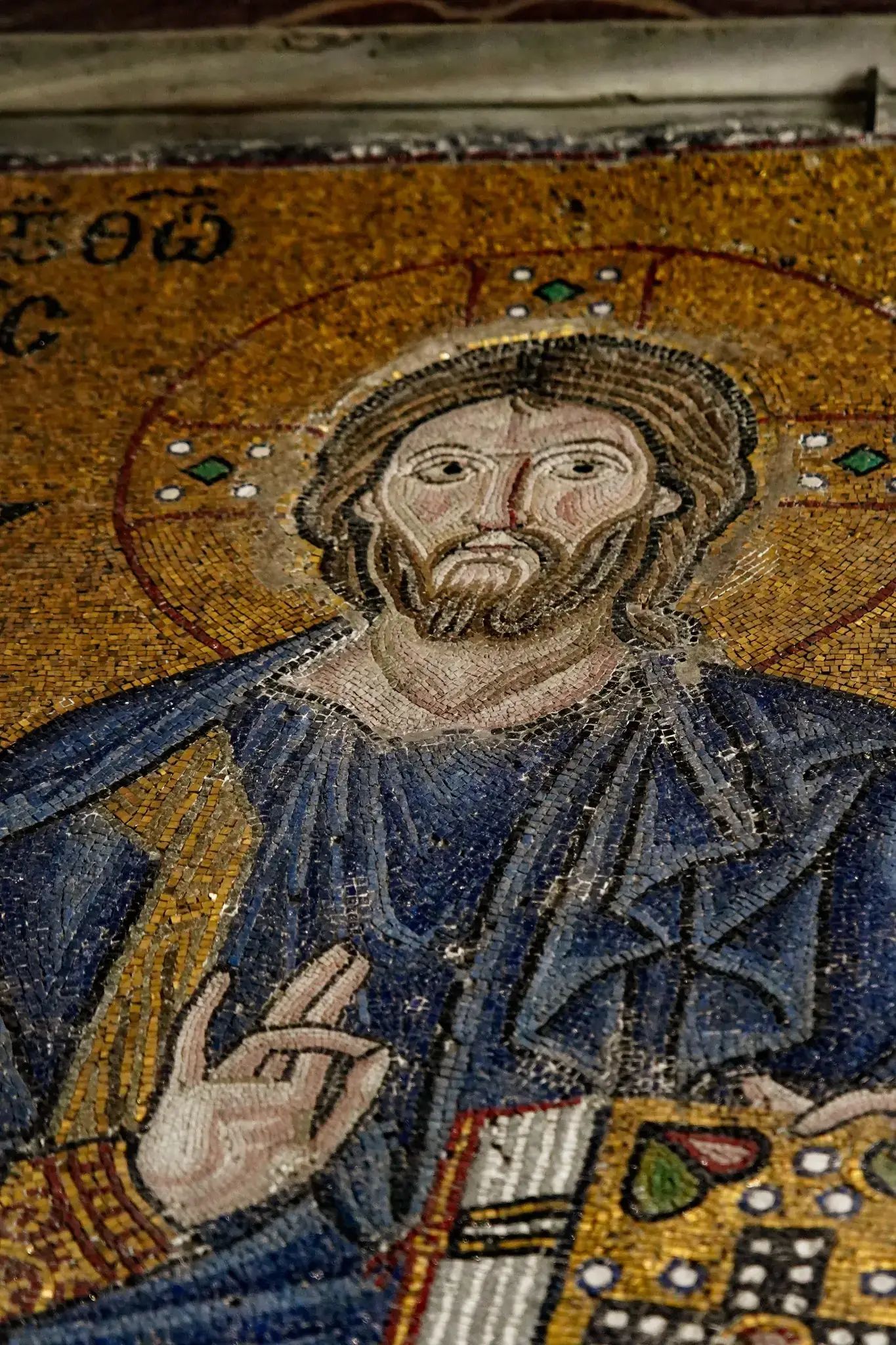
Hagia Sophia is an active mosque. Cultural visitors see it from the upper gallery, where the Byzantine mosaics are closest — the Deësis panel above all — and the whole space opens out below.
Carried on pendentives and a crown of windows, it set the pattern for domed buildings for centuries.
Christ between the Virgin and John the Baptist, among the finest Byzantine mosaics anywhere.
The great calligraphic roundels added in the nineteenth century, seen at eye level from the gallery.
The sultans’ palace on Sarayburnu: courtyards, the Imperial Council, the treasury and the terraces over the water. Dated entry, sold online on its own site.
Justinian’s great underground reservoir: 336 columns in still water and the two Medusa heads. Fast-track entry with a digital audio guide.
A nineteenth-century palace on the water’s edge: the Selamlık, the Ceremonial Hall under its chandelier, the crystal staircase and the Harem.

