
Topkapı Palace
The sultans’ palace on Sarayburnu: courtyards, the Imperial Council, the treasury and the terraces over the water. Dated entry, sold online on its own site.
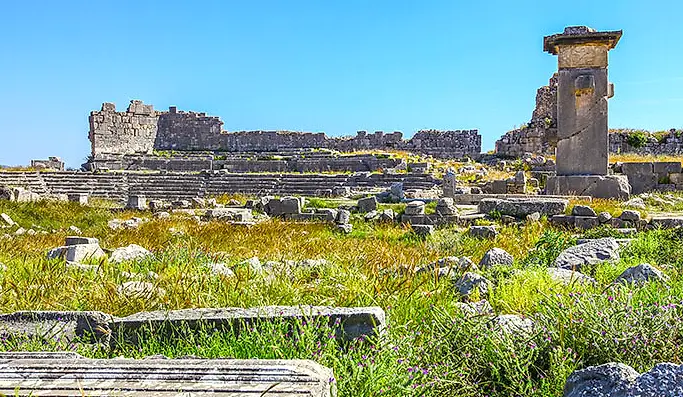
The great Lycian capital in the Eşen valley, a UNESCO World Heritage site with monumental tombs, a Roman theatre, the Vespasian Arch and a legacy of fierce resistance.
Xanthos was built on two hills that dominate the plain beside today's Eşen river. The two hills carry the Lycian and Roman acropoleis. According to Herodotus, when the Persians came in the mid-sixth century BC the people of Xanthos fought to the death rather than surrender, an act of resistance that has become part of the city's identity. A great fire hit the city between 475 and 450 BC. In the second century BC it was the capital of the Lycian League, it came under Roman control in 42 BC, and it remained a bishopric under the Byzantines until the Arab raids of the seventh century.
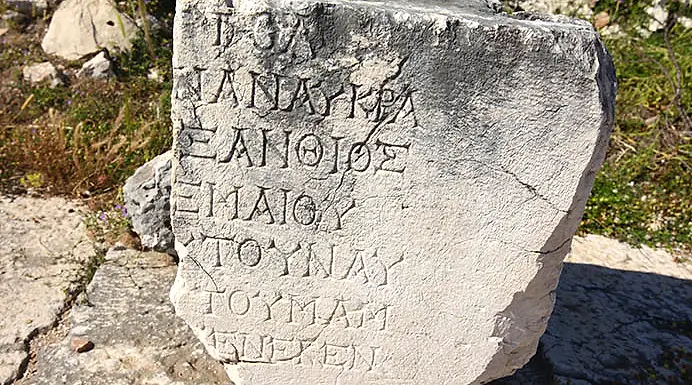
UNESCO inscribed Xanthos and the nearby sanctuary of Letoon on its World Heritage List in 1988. Xanthos is especially known for monumental tombs. The Inscribed Pillar, about four metres tall, carries the longest surviving Lycian inscription. The Harpy Monument, its reliefs of human and winged figures now in England, along with the Nereid Monument and the Lion Tomb, were removed by ship in the nineteenth century, so much of Xanthos's art is now in London.
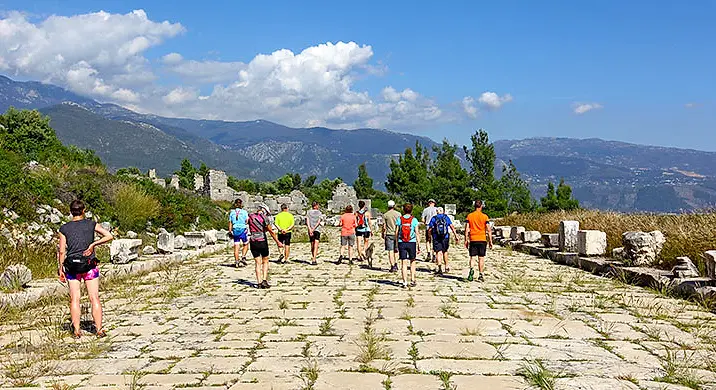
On site you can still see the Roman theatre, the Vespasian Arch, which stood at the city's southern entrance, and city walls dating back to the fifth century BC. On the acropolis are a palace, a building believed to be a temple of Artemis and the ruins of a Byzantine monastery. A water system still used for irrigation runs through the city, fed from the spring at İnpınarı, the eye of the water, some kilometres away.
According to the Ministry’s listing it opens at 08:30 and closes at 20:00 (last entry 19:30). Open every day.
No. This site sells no tickets. Topkapı Palace, the Basilica Cistern, Hagia Sophia and Dolmabahçe Palace are sold on our sister sites; for Xanthos Archaeological Site, buy at the ticket office or on the Ministry’s official e-ticket system.
Xanthos Archaeological Site is in Antalya, Türkiye — Kınık Mahallesi, Fethiye Karayolu.
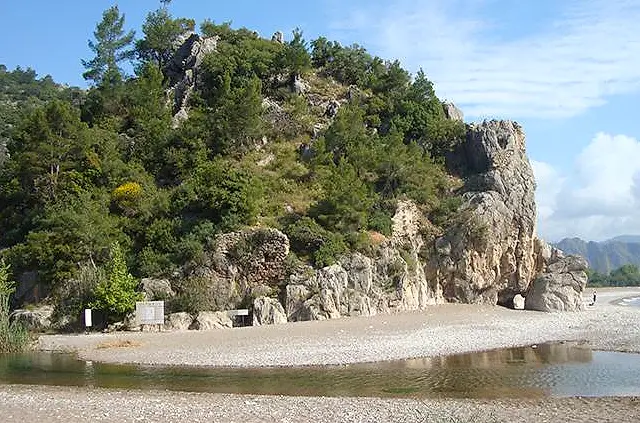
A Lycian coast city hidden in a wooded valley beside a beach, once a pirates' haven, with a theatre, a Byzantine church and the eternal flames of Chimaera nearby.
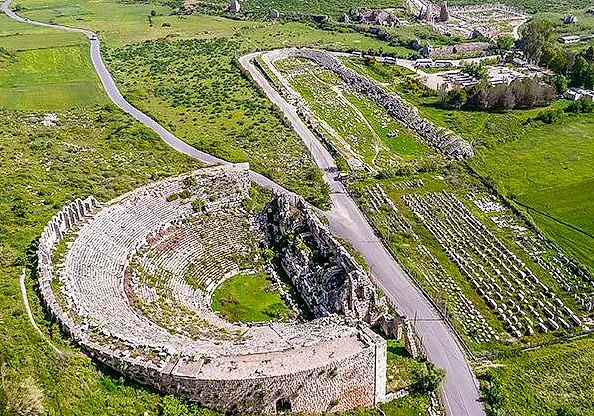
One of Turkey's best-preserved Roman cities, on a plain east of Antalya, with a Hellenistic gate, colonnaded streets, theatre and stadium.
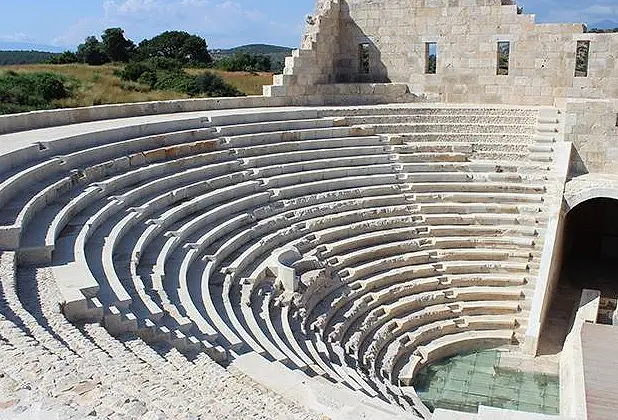
Capital of the Lycian League and birthplace of St. Nicholas, on a coast beside one of Turkey's longest beaches, with a lighthouse, a parliament house and an oracle tradition.
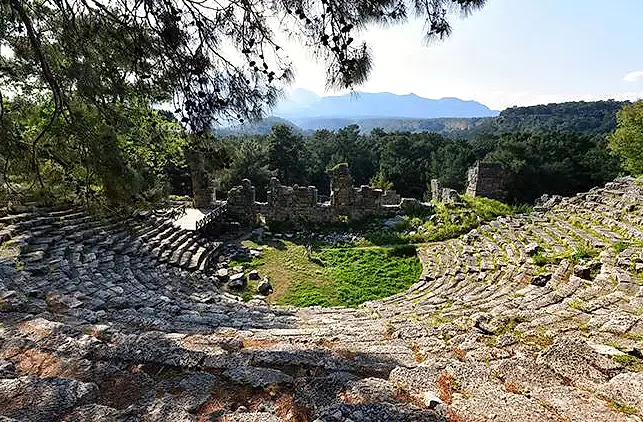
A trading city on a pine-covered peninsula with three harbours, visited by Emperor Hadrian and Alexander the Great, and known for its water-supply engineering.
Four Istanbul landmarks, each sold on its own site by the agency behind this guide — dated entry and free cancellation up to 24 hours.
The sultans’ palace on Sarayburnu: courtyards, the Imperial Council, the treasury and the terraces over the water. Dated entry, sold online on its own site.
Justinian’s great underground reservoir: 336 columns in still water and the two Medusa heads. Fast-track entry with a digital audio guide.
Justinian’s cathedral, the sultans’ mosque and a working mosque again today. The ticket admits you to the upper visitor gallery.
A nineteenth-century palace on the water’s edge: the Selamlık, the Ceremonial Hall under its chandelier, the crystal staircase and the Harem.


