
Topkapı Palace
The sultans’ palace on Sarayburnu: courtyards, the Imperial Council, the treasury and the terraces over the water. Dated entry, sold online on its own site.
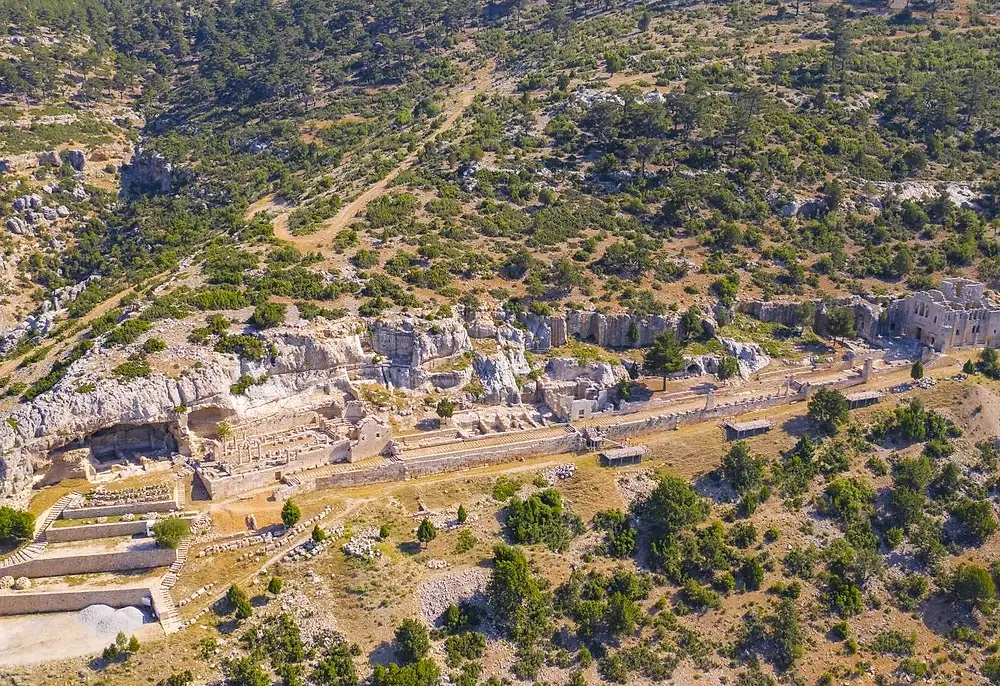
An early Christian pilgrimage complex on a terrace high above the Göksu Valley near Mut, with two churches, monks' cells cut in rock and a rich stone-carved decoration.
Alahan Monastery sits on an east-west terrace on a steep hill some twenty kilometres north of Mut, in Mersin province, about 1,000 metres above the Göksu Valley and 1,300 metres above sea level. You reach it by a climb of about two kilometres. The Ottoman travel writer Evliya Çelebi wrote that it looked as if its maker had just finished it.
The complex is usually credited to the Isaurian emperor Zeno, who ruled from AD 474 to 491, although the monastery is estimated to date to about 440 to 442. In the 5th and 6th centuries Christians travelled in large numbers on pilgrimage to the Holy Land, and Anatolia was an important stopover. Alahan became one of the pilgrim centres serving them, and Christian buildings from the 5th and 6th centuries have survived here.
The complex holds the Western Church, the monastery, the Eastern Church, monks' chambers carved into the rock and tombs nearby, plus a baptistery, a colonnaded walkway, baths, water sources and living quarters. Its two large churches, richly decorated, are among the highlights of early Christian and Byzantine art, and the architecture recalls the Hagia Sophia. A masterful stone-carving tradition is visible in the doorways and capitals.
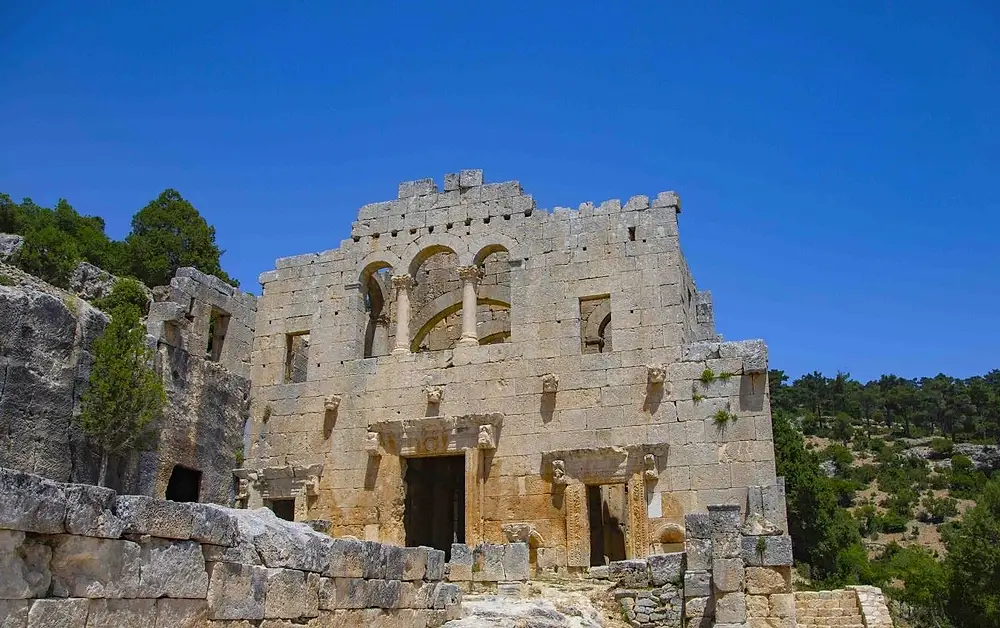
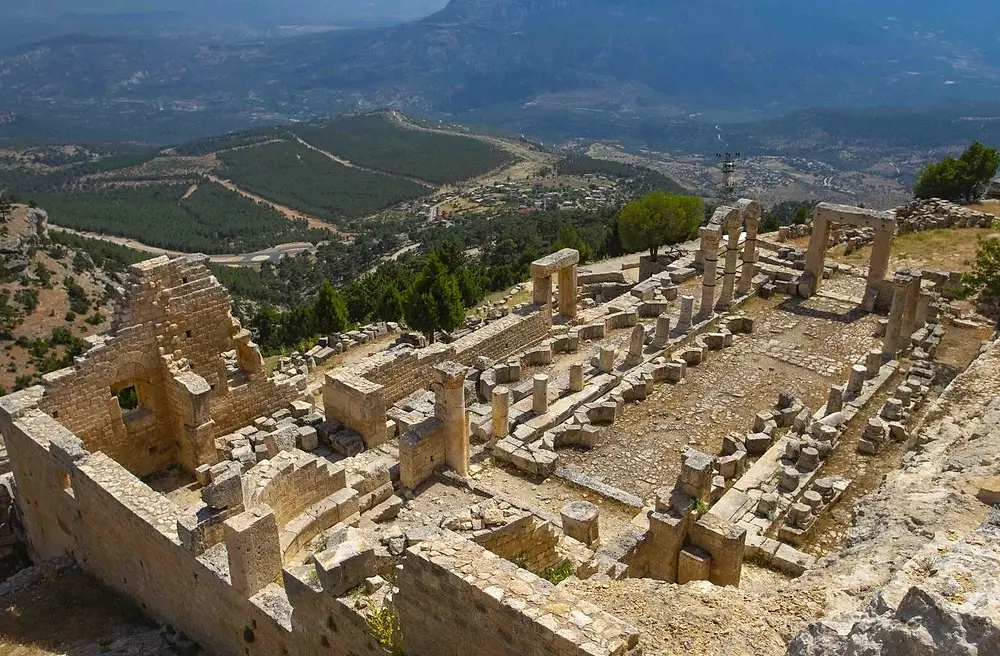
According to the Ministry’s listing it opens at 08:15 and closes at 17:00 (last entry 16:45). Open every day.
No. This site sells no tickets. Topkapı Palace, the Basilica Cistern, Hagia Sophia and Dolmabahçe Palace are sold on our sister sites; for Alahan Monastery, buy at the ticket office or on the Ministry’s official e-ticket system.
Alahan Monastery is in Mersin, Türkiye — Geçimli Mahallesi.
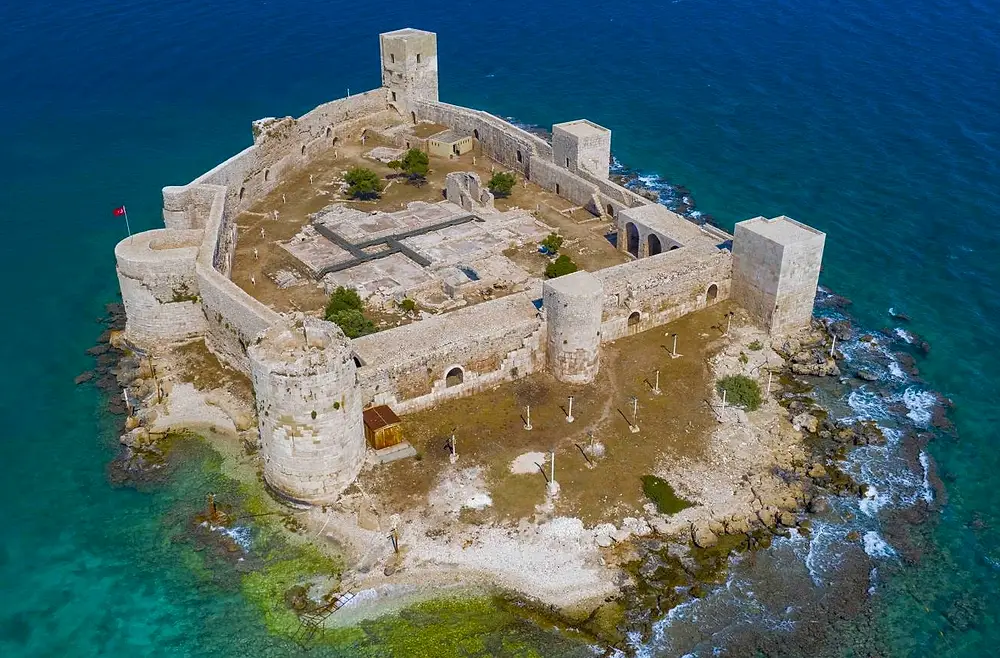
The coastal ruins of ancient Korykos at Kızkalesi, Mersin: a land castle, a necropolis valley and the sea castle offshore, layered with Roman, Byzantine and Armenian history.
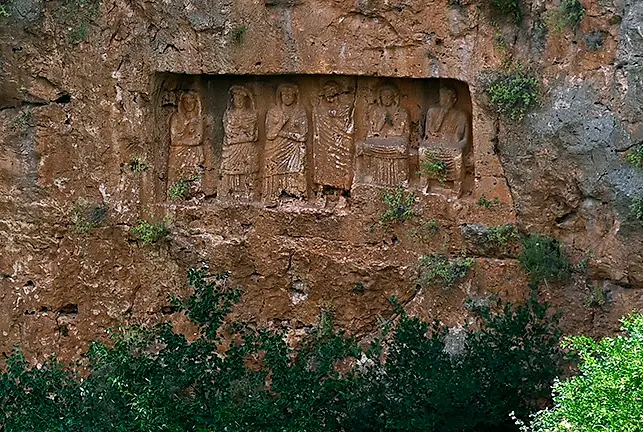
An ancient Cilician city built around a huge sinkhole west of Mersin, with churches, olive workshops, cisterns and a Roman road.
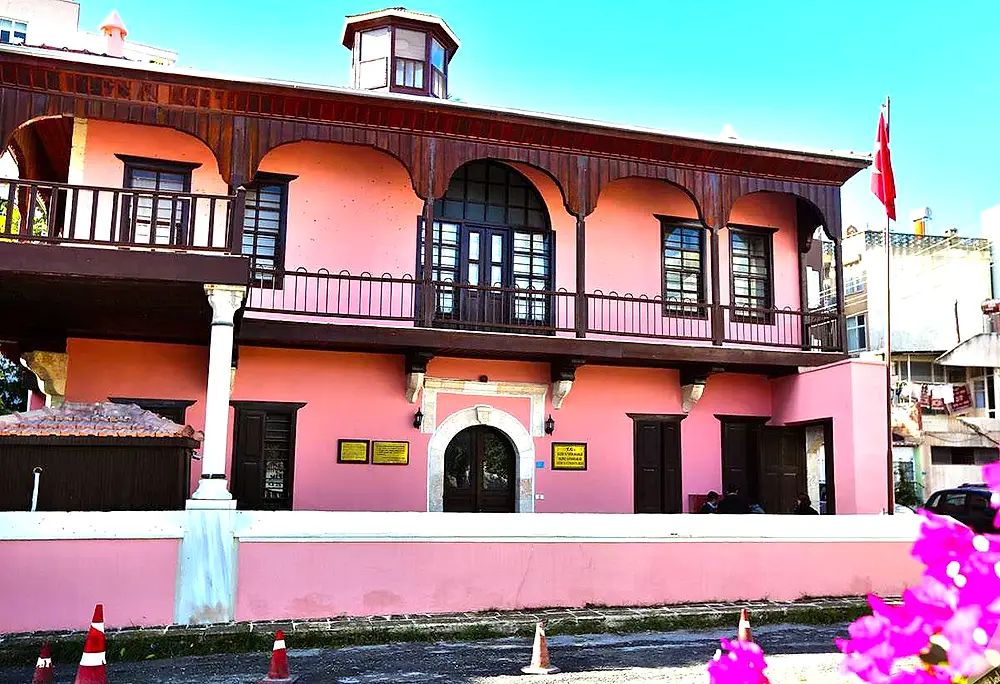
A 1914 stone-and-timber house in Silifke where Atatürk stayed on his first visit in 1925, now showing his belongings, photographs and local ethnography.
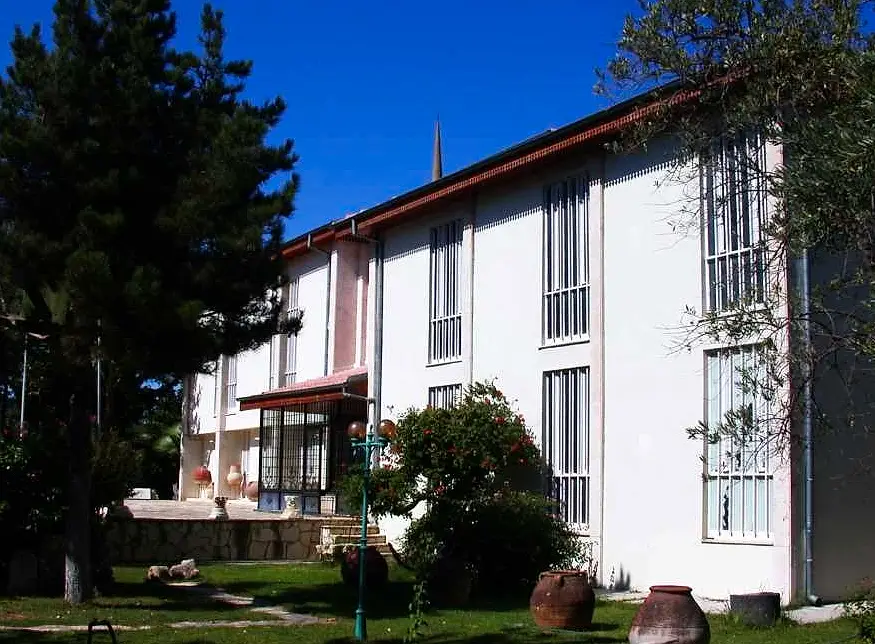
The archaeological museum of Silifke, with finds from the Bronze Age to the Ottoman era shown in stone, coin, jewellery, ethnographic and garden displays.
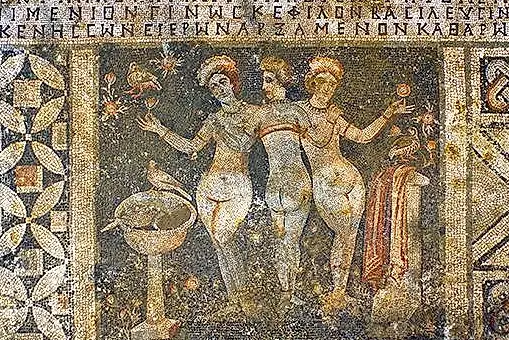
A small museum built around a Roman bath floor showing the Three Graces, on the bay of Narlıkuyu near Silifke.
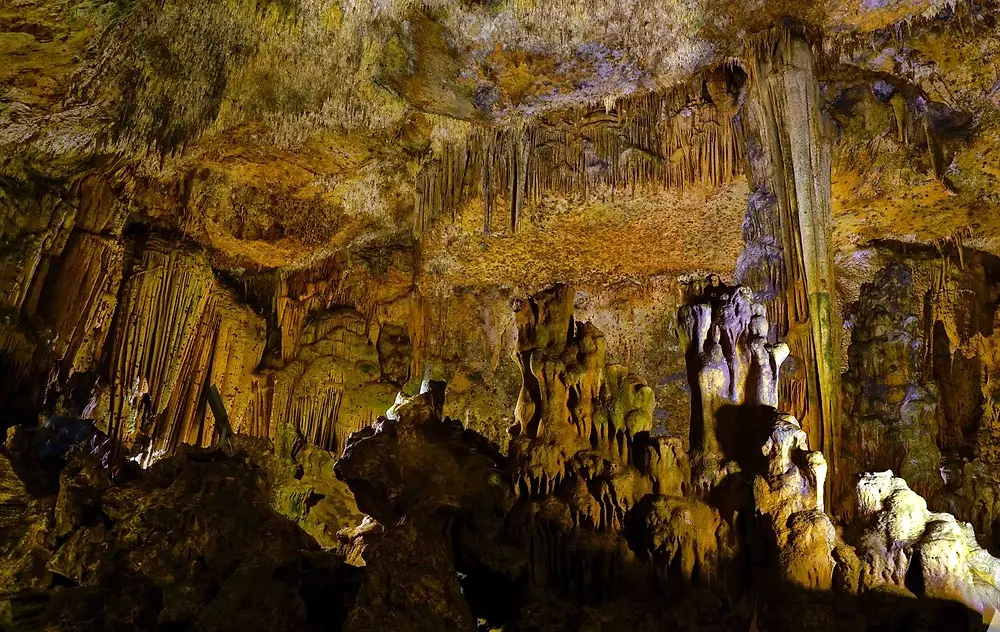
A natural cave near Narlıkuyu reached by a spiral iron staircase, known for its humid air, its stalactites and its "wishing cave" folklore.
Four Istanbul landmarks, each sold on its own site by the agency behind this guide — dated entry and free cancellation up to 24 hours.
The sultans’ palace on Sarayburnu: courtyards, the Imperial Council, the treasury and the terraces over the water. Dated entry, sold online on its own site.
Justinian’s great underground reservoir: 336 columns in still water and the two Medusa heads. Fast-track entry with a digital audio guide.
Justinian’s cathedral, the sultans’ mosque and a working mosque again today. The ticket admits you to the upper visitor gallery.
A nineteenth-century palace on the water’s edge: the Selamlık, the Ceremonial Hall under its chandelier, the crystal staircase and the Harem.


