
Topkapı Palace
The sultans’ palace on Sarayburnu: courtyards, the Imperial Council, the treasury and the terraces over the water. Dated entry, sold online on its own site.

A ruined coastal city east of Alanya with a monumental gate, cisterns, a baptism cave with frescoes and a colonnaded street 250 m long.
Syedra lies about 20 kilometres along the Alanya-Gazipaşa road, within the boundaries of Seki village. Visitors enter through a monumental gate in the west that is still standing. Inside, plastered cisterns fed by a natural spring have been in use from antiquity to the present, and many other cisterns supplied the city's water.
In a cave within the city, the niche cut into the rock is framed with frescoes. The cave served religious purposes and is known as the baptism cave. In the east of the site is a very grand bath, whose floor still shows patches of mosaic, and just west of it runs the city's colonnaded street.
Excavations by Alanya Museum since 1994 have shown that this street measured 250 by 10 metres, covered on the north side by a timber roof carried on columns and open on the south with stone paving. Inscriptions with information about games and competitions add to the city's importance. Other remains include a temple, a theatre, shops, houses and the city walls. Remains found span from the 7th century BC to the 13th century AD.
According to the Ministry’s listing it opens at 08:00 and closes at 17:00 (last entry 16:30). Open every day.
No. This site sells no tickets. Topkapı Palace, the Basilica Cistern, Hagia Sophia and Dolmabahçe Palace are sold on our sister sites; for Syedra Ancient City, buy at the ticket office or on the Ministry’s official e-ticket system.
Syedra Ancient City is in Antalya, Türkiye — Seki Mahallesi Asar Mevkii.
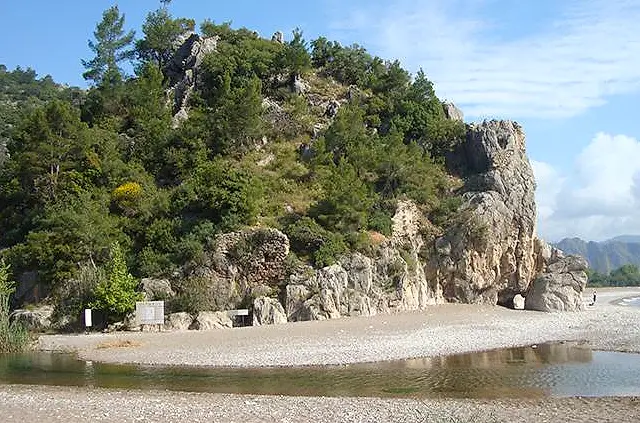
A Lycian coast city hidden in a wooded valley beside a beach, once a pirates' haven, with a theatre, a Byzantine church and the eternal flames of Chimaera nearby.
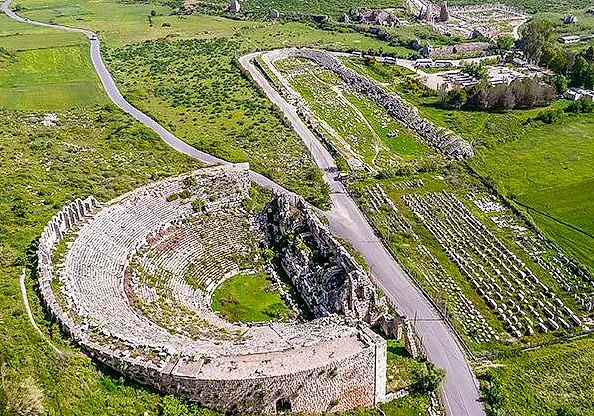
One of Turkey's best-preserved Roman cities, on a plain east of Antalya, with a Hellenistic gate, colonnaded streets, theatre and stadium.
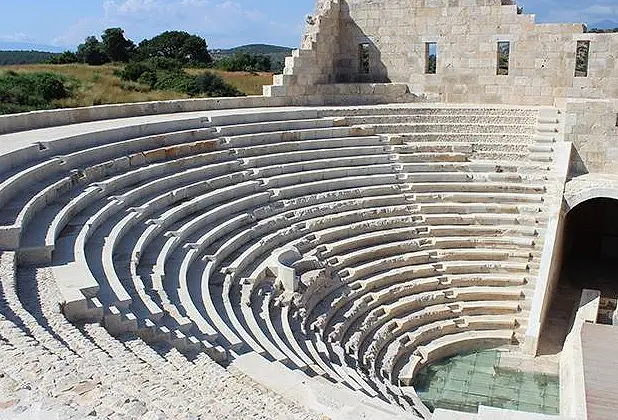
Capital of the Lycian League and birthplace of St. Nicholas, on a coast beside one of Turkey's longest beaches, with a lighthouse, a parliament house and an oracle tradition.
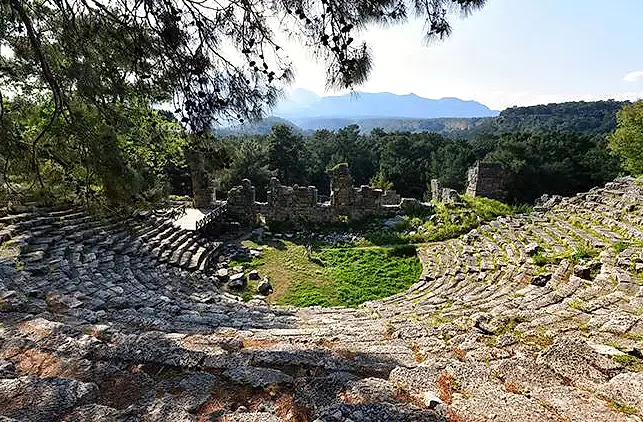
A trading city on a pine-covered peninsula with three harbours, visited by Emperor Hadrian and Alexander the Great, and known for its water-supply engineering.
Four Istanbul landmarks, each sold on its own site by the agency behind this guide — dated entry and free cancellation up to 24 hours.
The sultans’ palace on Sarayburnu: courtyards, the Imperial Council, the treasury and the terraces over the water. Dated entry, sold online on its own site.
Justinian’s great underground reservoir: 336 columns in still water and the two Medusa heads. Fast-track entry with a digital audio guide.
Justinian’s cathedral, the sultans’ mosque and a working mosque again today. The ticket admits you to the upper visitor gallery.
A nineteenth-century palace on the water’s edge: the Selamlık, the Ceremonial Hall under its chandelier, the crystal staircase and the Harem.


