
Topkapı Palace
The sultans’ palace on Sarayburnu: courtyards, the Imperial Council, the treasury and the terraces over the water. Dated entry, sold online on its own site.
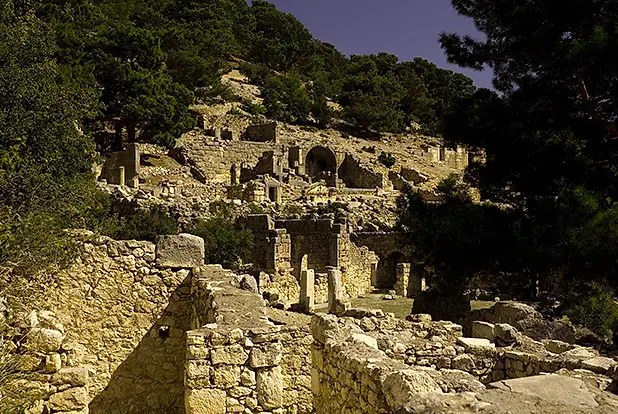
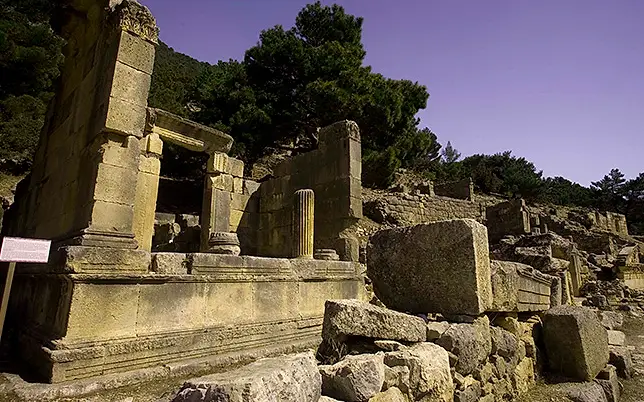
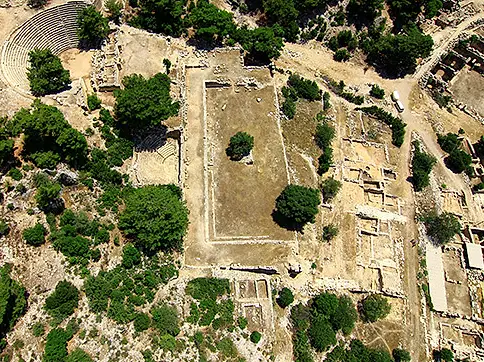
A terraced Lycian mountain city below the sheer Şahinkaya cliff, with a theatre, stadium, agora and baths climbing the slope.
Arykanda sits on the south side of the Bey Mountains, at the foot of a sheer rock face called Şahinkaya that closes the settlement to the north. Its name comes from Luwian and means roughly "the place beside the high rock". The British traveller Charles Fellows first identified the site in 1838, from tomb inscriptions and coins found on the surface.
The city was densely settled in the Hellenistic and Roman periods; its earliest architecture is rock-cut tombs of the late 4th or early 3rd century BC. Although it played no major political role in Lycian history, Arykanda lay on one of eastern Lycia's main roads and grew rich on the timber trade. Abundant water made it a safe stopping place in the Roman imperial era, and its peak came in the 2nd and 3rd centuries AD.
As a typical hillside town, it is built on terraces. On the lower terrace lie a gymnasium and a bath; on the upper terrace a theatre, odeon, stadium, agora and a small bath. On the acropolis are the temples of Trajan and Helios, while a basilica stands on Nal Tepe and tombs fill the east necropolis.
According to the Ministry’s listing it opens at 08:00 and closes at 19:00 (last entry 18:30). Open every day.
No. This site sells no tickets. Topkapı Palace, the Basilica Cistern, Hagia Sophia and Dolmabahçe Palace are sold on our sister sites; for Arykanda Archaeological Site, buy at the ticket office or on the Ministry’s official e-ticket system.
Arykanda Archaeological Site is in Antalya, Türkiye — Arif Mahallesi.
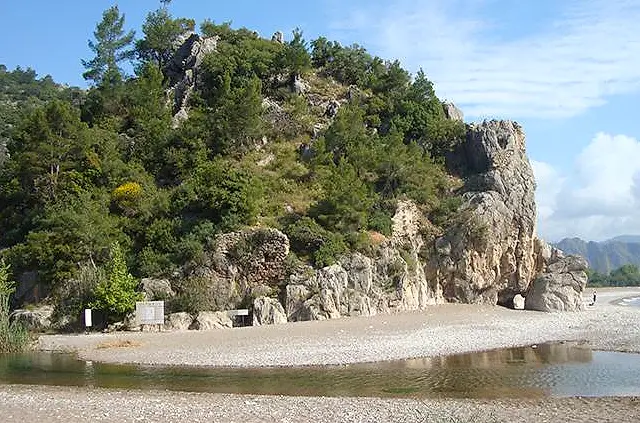
A Lycian coast city hidden in a wooded valley beside a beach, once a pirates' haven, with a theatre, a Byzantine church and the eternal flames of Chimaera nearby.
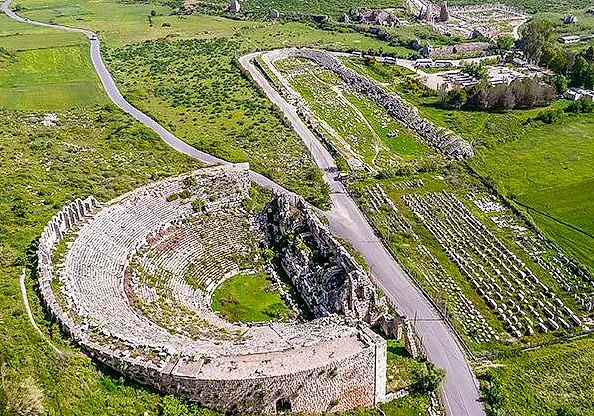
One of Turkey's best-preserved Roman cities, on a plain east of Antalya, with a Hellenistic gate, colonnaded streets, theatre and stadium.
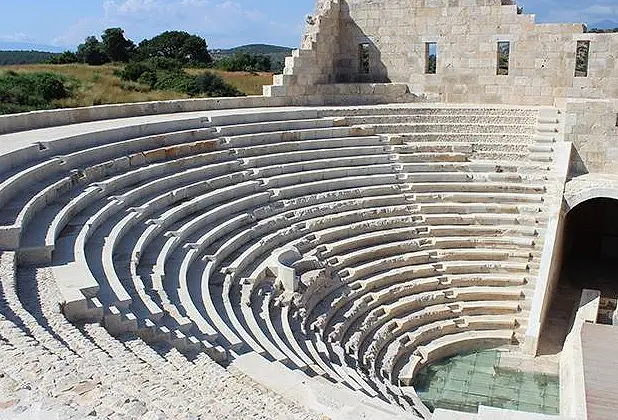
Capital of the Lycian League and birthplace of St. Nicholas, on a coast beside one of Turkey's longest beaches, with a lighthouse, a parliament house and an oracle tradition.
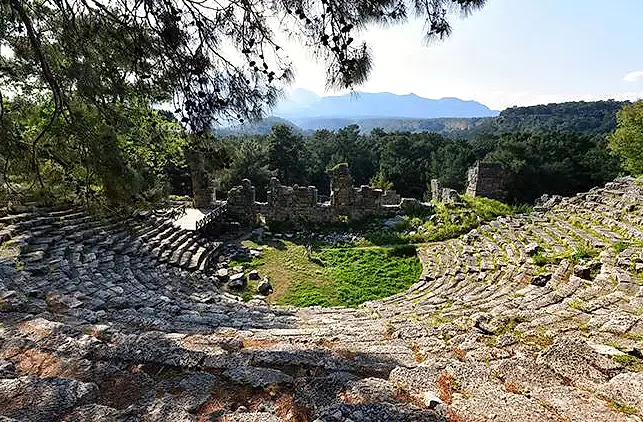
A trading city on a pine-covered peninsula with three harbours, visited by Emperor Hadrian and Alexander the Great, and known for its water-supply engineering.
Four Istanbul landmarks, each sold on its own site by the agency behind this guide — dated entry and free cancellation up to 24 hours.
The sultans’ palace on Sarayburnu: courtyards, the Imperial Council, the treasury and the terraces over the water. Dated entry, sold online on its own site.
Justinian’s great underground reservoir: 336 columns in still water and the two Medusa heads. Fast-track entry with a digital audio guide.
Justinian’s cathedral, the sultans’ mosque and a working mosque again today. The ticket admits you to the upper visitor gallery.
A nineteenth-century palace on the water’s edge: the Selamlık, the Ceremonial Hall under its chandelier, the crystal staircase and the Harem.


