
Topkapı Palace
The sultans’ palace on Sarayburnu: courtyards, the Imperial Council, the treasury and the terraces over the water. Dated entry, sold online on its own site.
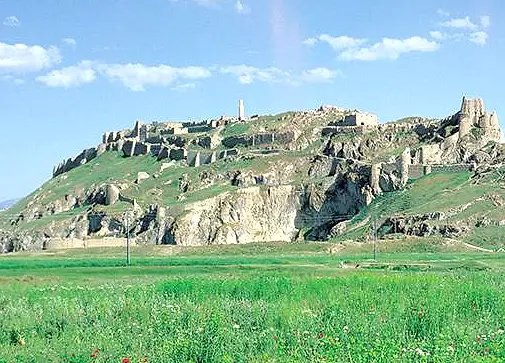
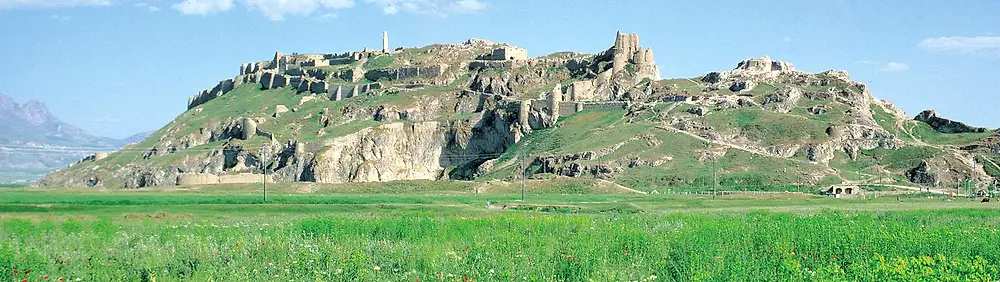
Tushpa, the Urartian capital on a huge rock beside Lake Van, with royal rock tombs, cuneiform inscriptions and the ruins of Old Van at its foot.
Van Castle, ancient Tushpa, is the former capital of the Urartian Kingdom, which was centred on the Lake Van basin between the ninth and sixth centuries BC. The citadel stands on a long, high rock on the southern shore of the lake, and the region around it is the most fertile land in the area, which is why people settled here from the Early Bronze Age into the twentieth century. The fortress is thought to have been founded in the mid-ninth century BC by King Sarduri I, and its entrance is in the northwest.
The Sardur Tower near the entrance is the citadel's earliest building, and it carries cuneiform inscriptions in the Assyrian language announcing the foundation of the capital. Higher up there are the tomb monument of King Argishti I and cuneiform annals on the walls, and on the southern side are rock-cut burial chambers of the Urartian kings. Some of these are huge, showing how skilled the builders were at carving and laying out symmetrical chambers. Other features include Menua's Stable, a rock chamber for cattle, and the terrace called the Mother with Daughter sacred place, with two niches that once held stelae recording military campaigns.
South of the citadel lie the remains of Old Van, a walled town inhabited from the thirteenth century until 1915, with its Seljuk Great Mosque, Ottoman mosques such as Kaya Çelebi and Hüsrev Paşa and old churches. North of the rock, the Mound of Van Castle preserves about five thousand years of settlement.
According to the Ministry’s listing it opens at 08:00 and closes at 19:30 (last entry 19:00). Open every day.
No. This site sells no tickets. Topkapı Palace, the Basilica Cistern, Hagia Sophia and Dolmabahçe Palace are sold on our sister sites; for Van Castle, buy at the ticket office or on the Ministry’s official e-ticket system.
Van Castle is in Van, Türkiye — Yalı Mahallesi, 65040 Merkez/İpekyolu.
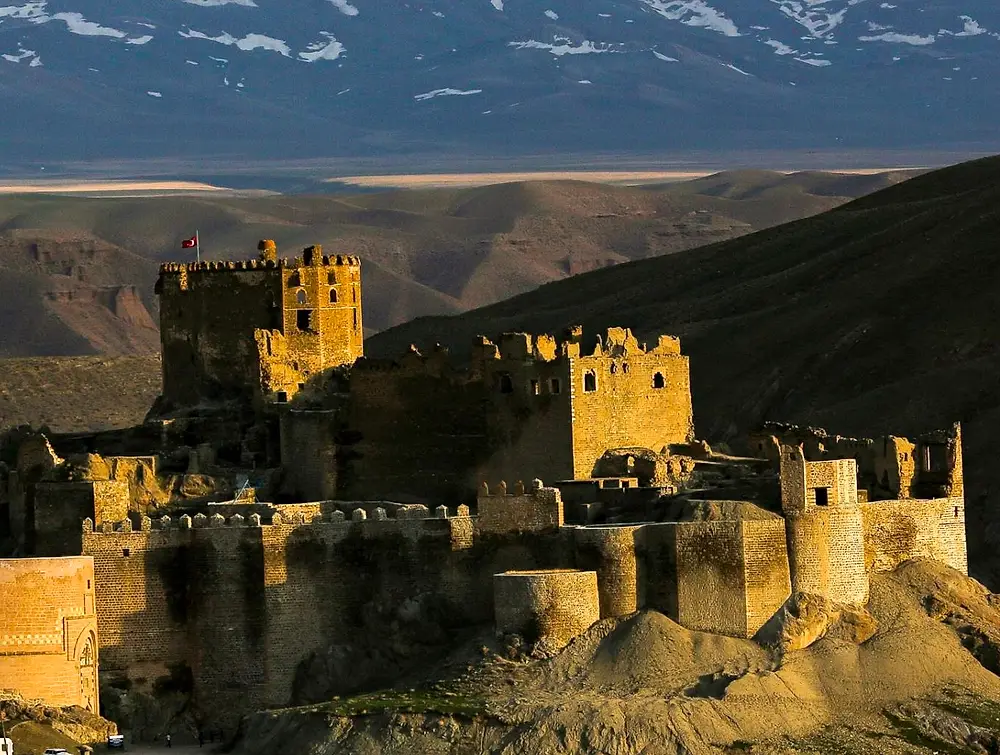
A seventeenth-century Kurdish-Ottoman fortress on a sheer rock above the Hoşap stream, with a lion-relief gate, a Persian inscription and the ruins of a whole small town inside.
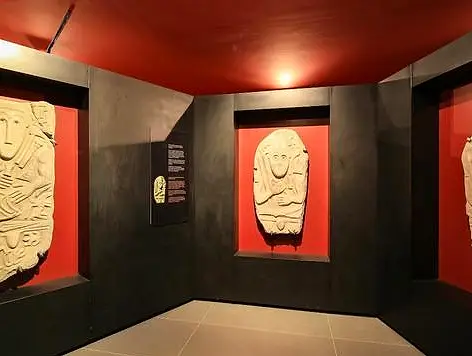
A large modern museum in Van tracing the city's past from the Palaeolithic to the Ottomans, with an outstanding Urartian collection and rare Iron Age stelae from Hakkari.
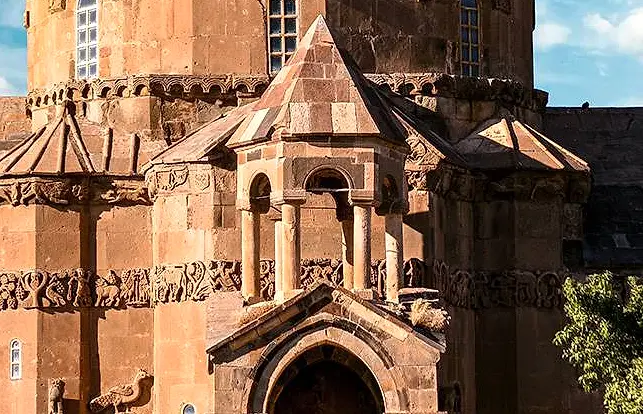
A tenth-century Armenian royal church on Akdamar Island in Lake Van, covered in stone reliefs of biblical scenes, animals and court life, reached by a short boat ride.
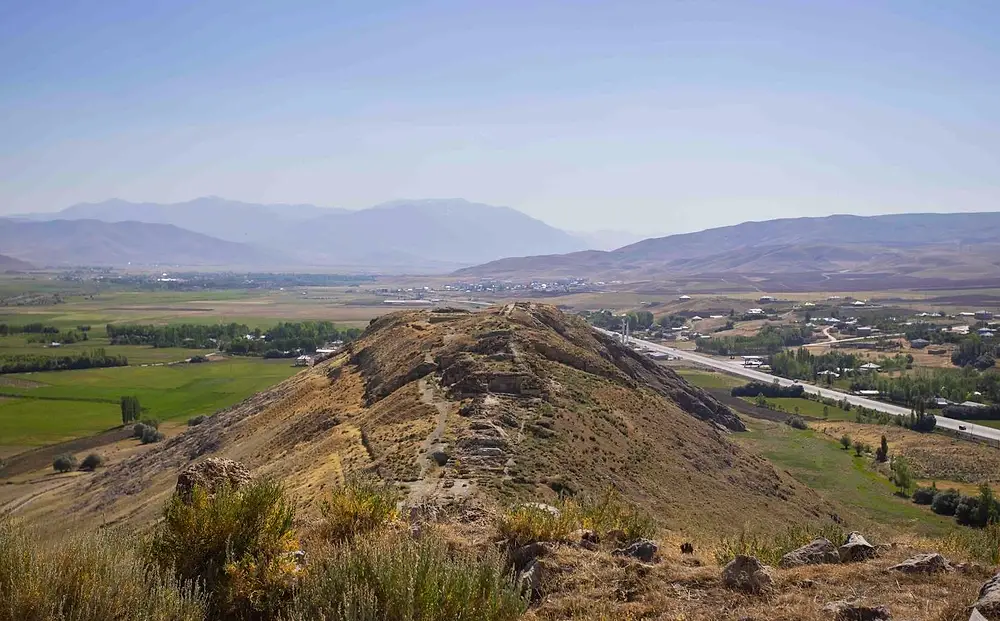
An eighth-century BC Urartian fortress southeast of Van, with an upper castle and temple of Haldi, a lower castle with palace and workshops, and a rock-cut necropolis.
Four Istanbul landmarks, each sold on its own site by the agency behind this guide — dated entry and free cancellation up to 24 hours.
The sultans’ palace on Sarayburnu: courtyards, the Imperial Council, the treasury and the terraces over the water. Dated entry, sold online on its own site.
Justinian’s great underground reservoir: 336 columns in still water and the two Medusa heads. Fast-track entry with a digital audio guide.
Justinian’s cathedral, the sultans’ mosque and a working mosque again today. The ticket admits you to the upper visitor gallery.
A nineteenth-century palace on the water’s edge: the Selamlık, the Ceremonial Hall under its chandelier, the crystal staircase and the Harem.


