
Topkapı Palace
The sultans’ palace on Sarayburnu: courtyards, the Imperial Council, the treasury and the terraces over the water. Dated entry, sold online on its own site.
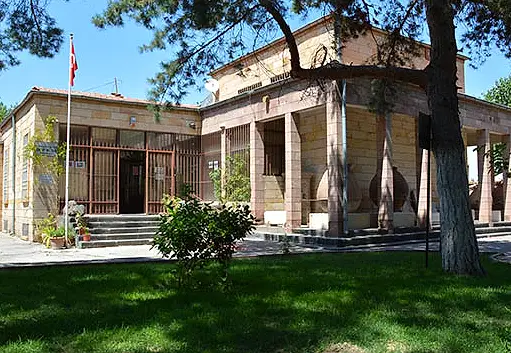
A compact museum of Cappadocian archaeology and ethnography, best known for a Roman bronze bust of Zeus Serapis and an icon of St. Eleftherios.
On September 30, 2026 the Ministry’s listing showed this museum as closed to visitors. Check the official page before planning a visit.
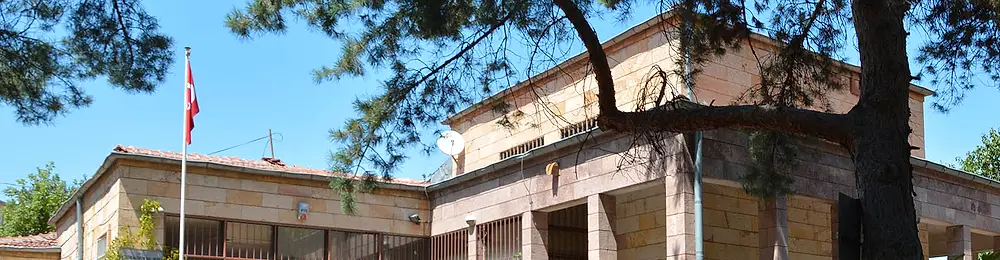
Ürgüp's museum began modestly. From 1965 archaeological finds were stored in the Tahsinağa Library, a single-domed building on Temenni Hill. Construction of a proper museum started in 1968, and the building opened to visitors in 1971. It has a basement and a ground floor, and the exhibition halls are on the ground floor.
The halls display archaeological and ethnographic objects from prehistoric times up to the Ottoman period, giving a broad view of life in this part of Cappadocia before it became famous for its balloons and cave hotels.
Two pieces stand out. The first is a Roman bronze bust of Zeus Serapis. Serapis was an Egyptian god who was understood differently from place to place; in Anatolia and Europe he was generally seen as a blend of Zeus and Hades, and this bust has the hair and beard associated with Zeus. The second is an icon of St. Eleftherios, a saint venerated in Orthodox Christianity as a protector of expectant mothers and women in childbirth.
According to the Ministry’s listing it opens at 00:00 and closes at 00:00.
No. This site sells no tickets. Topkapı Palace, the Basilica Cistern, Hagia Sophia and Dolmabahçe Palace are sold on our sister sites; for Ürgüp Museum, buy at the ticket office or on the Ministry’s official e-ticket system.
Ürgüp Museum is in Nevşehir, Türkiye — İmran Mahallesi,Atatürk Bulvarı No:39.
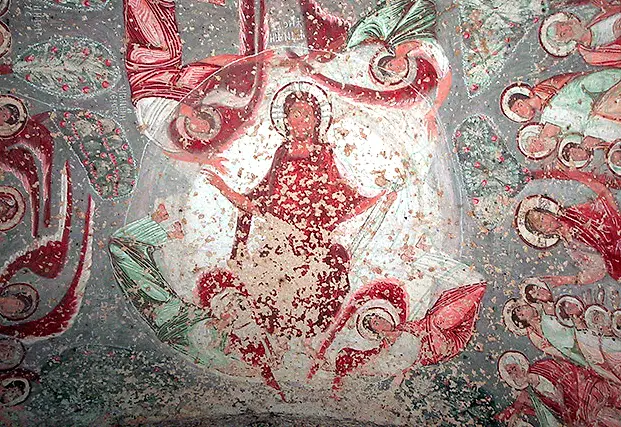
A rock-cut Byzantine church of 964–965 near Göreme, with a two-floor plan, monks' rooms below and frescoes of Emperor Nikephoros Phokas and his family.
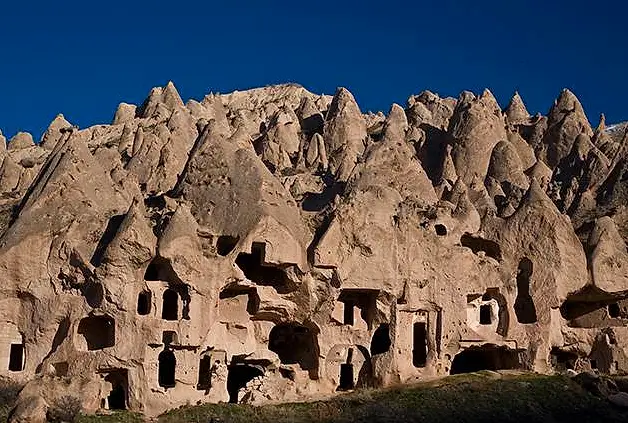
Three valleys of fairy chimneys in Cappadocia, once a Christian monastic settlement, with rock-cut churches, Saint Simeon's chapel and dovecotes.
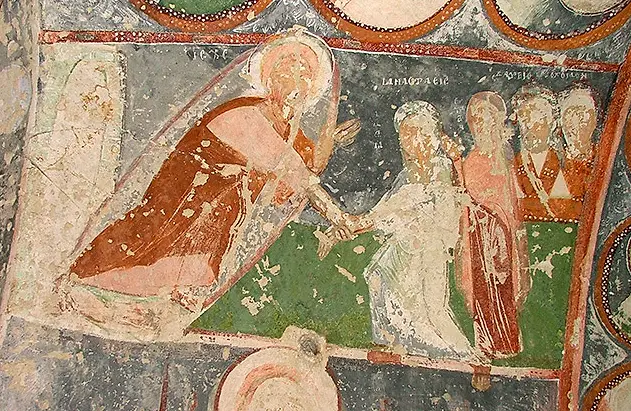
A tenth-century rock-cut church in the El Nazar valley near Göreme, painted in an archaic style with scenes from the life of Christ.
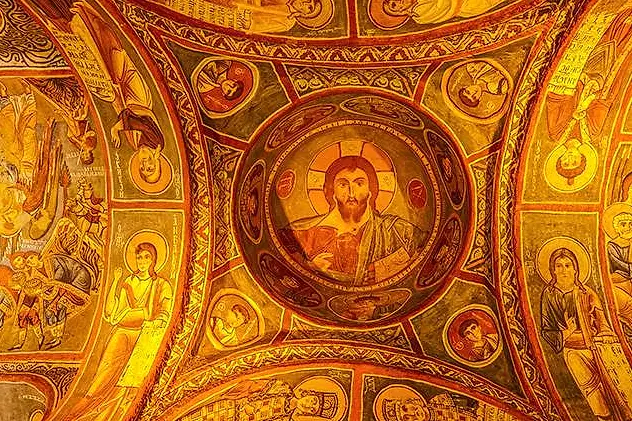
The most prized church of the Göreme Open Air Museum, a cross-plan rock church whose frescoes stayed vivid because so little light reaches them.
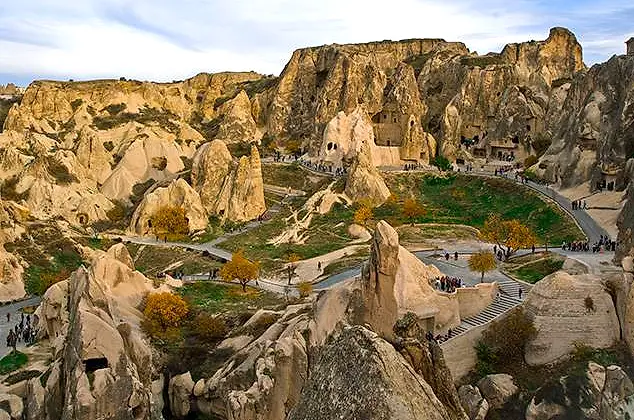
Cappadocia's best-known rock-cut monastic complex, with frescoed churches, chapels and refectories from the fourth to thirteenth centuries.
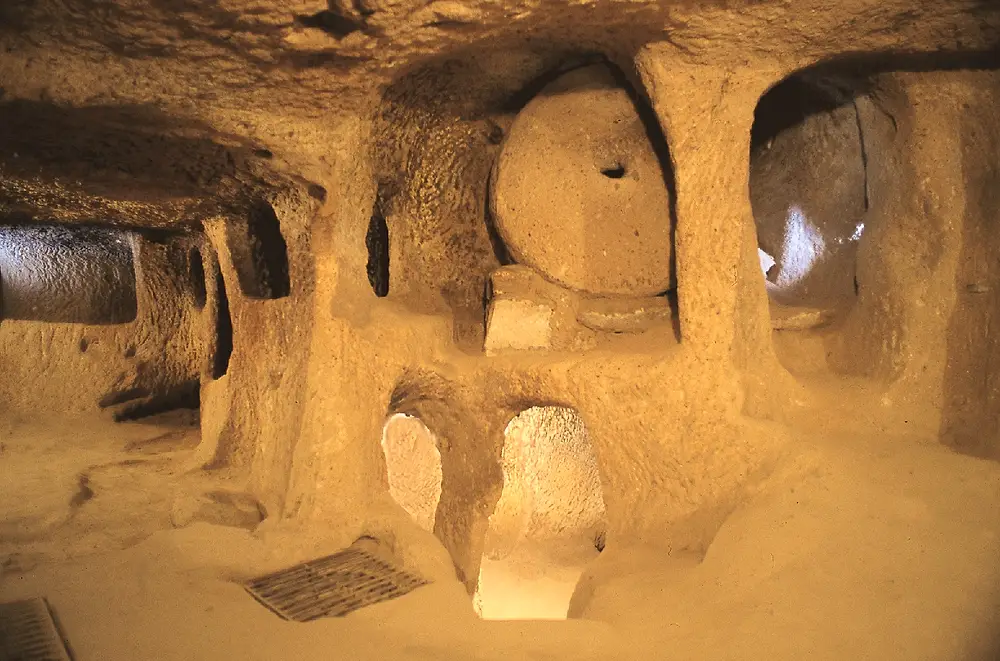
A labyrinth of tuff-carved rooms and tunnels eight levels deep at Kaymaklı, built as a refuge and still walkable on four lit levels.
Four Istanbul landmarks, each sold on its own site by the agency behind this guide — dated entry and free cancellation up to 24 hours.
The sultans’ palace on Sarayburnu: courtyards, the Imperial Council, the treasury and the terraces over the water. Dated entry, sold online on its own site.
Justinian’s great underground reservoir: 336 columns in still water and the two Medusa heads. Fast-track entry with a digital audio guide.
Justinian’s cathedral, the sultans’ mosque and a working mosque again today. The ticket admits you to the upper visitor gallery.
A nineteenth-century palace on the water’s edge: the Selamlık, the Ceremonial Hall under its chandelier, the crystal staircase and the Harem.


