
Topkapı Palace
The sultans’ palace on Sarayburnu: courtyards, the Imperial Council, the treasury and the terraces over the water. Dated entry, sold online on its own site.
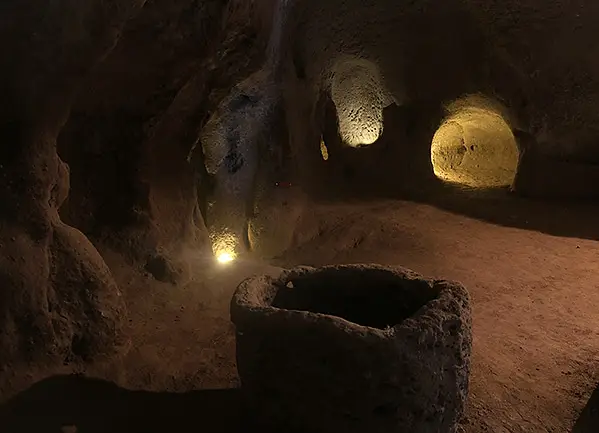
A smaller, quieter Cappadocian underground city near Ürgüp, with four entrances, a big rolling stone, stables and a church.
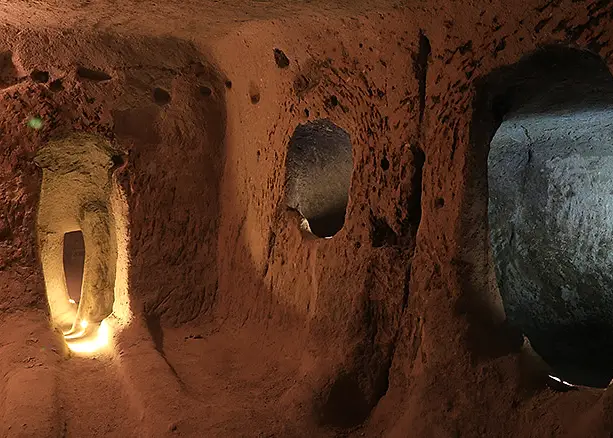
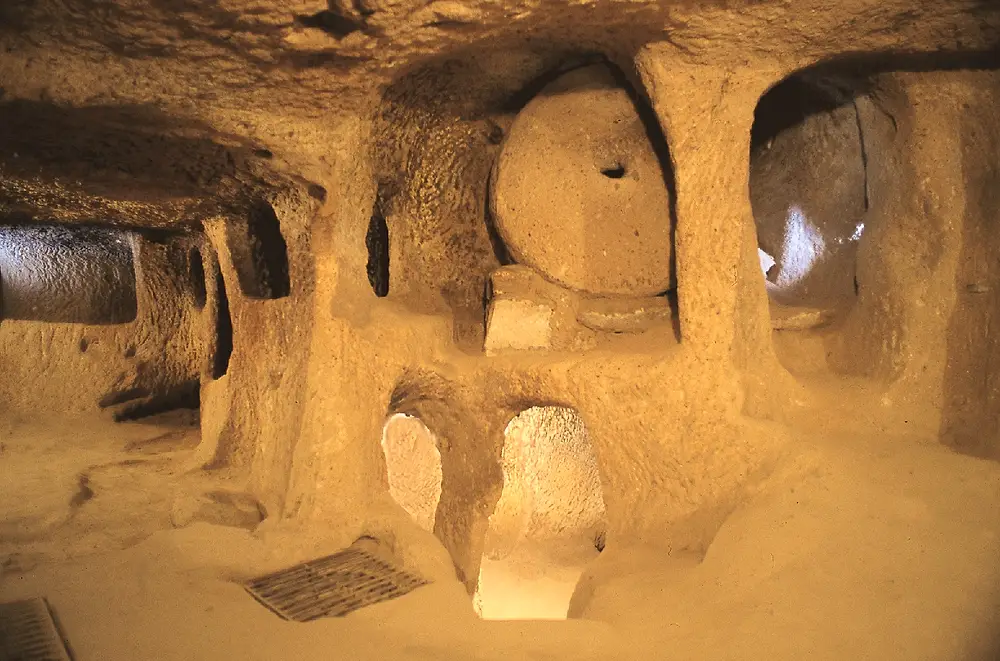
Mazı village, whose ancient name was Mataza, lies 18 kilometres south of Ürgüp and 10 kilometres east of Kaymaklı. At least four entrances have been found in different places. The main one is a corridor lined with irregular stones, and a large rolling stone in the short passage controls who comes and goes; a small room inside allows the stone to move freely.
One striking feature is how many stables spread through the underground settlement. A short corridor from the stables leads to the underground church, whose entrance could be sealed with a rolling stone. The church apse is carved into a corner, and its façade is decorated with reliefs.
Mazı is smaller than the better-known underground cities, which is exactly its appeal for anyone who wants to study the defensive design without a crowd.
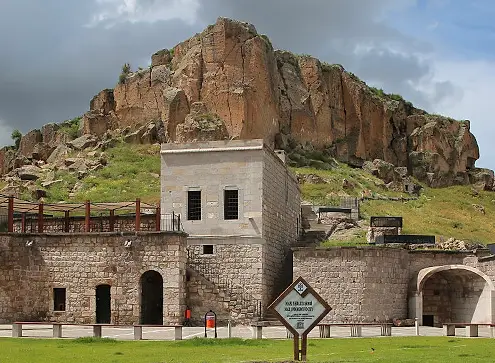
According to the Ministry’s listing it opens at 08:00 and closes at 19:00 (last entry 18:15). Open every day.
No. This site sells no tickets. Topkapı Palace, the Basilica Cistern, Hagia Sophia and Dolmabahçe Palace are sold on our sister sites; for Mazı Underground City, buy at the ticket office or on the Ministry’s official e-ticket system.
Mazı Underground City is in Nevşehir, Türkiye — Mazı Köyü.
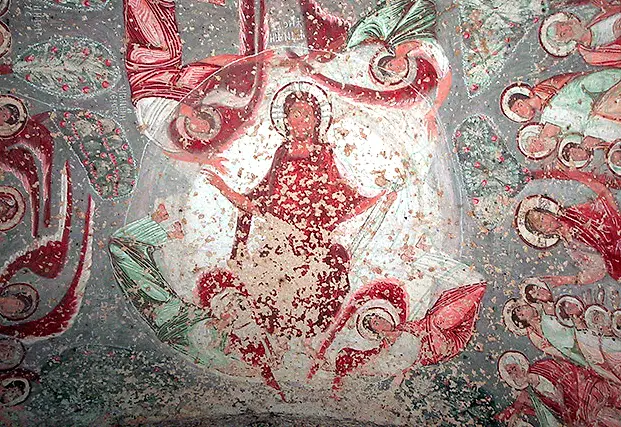
A rock-cut Byzantine church of 964–965 near Göreme, with a two-floor plan, monks' rooms below and frescoes of Emperor Nikephoros Phokas and his family.
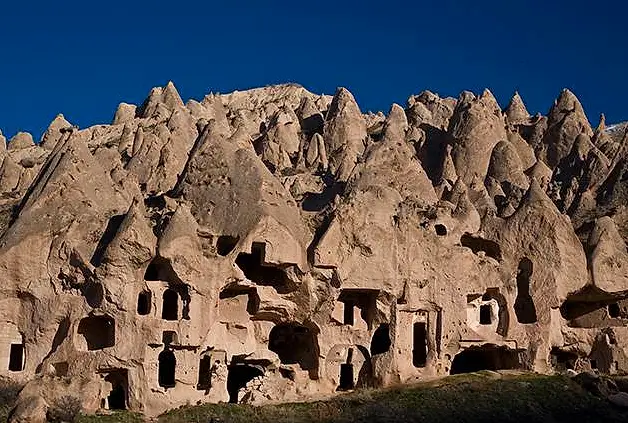
Three valleys of fairy chimneys in Cappadocia, once a Christian monastic settlement, with rock-cut churches, Saint Simeon's chapel and dovecotes.
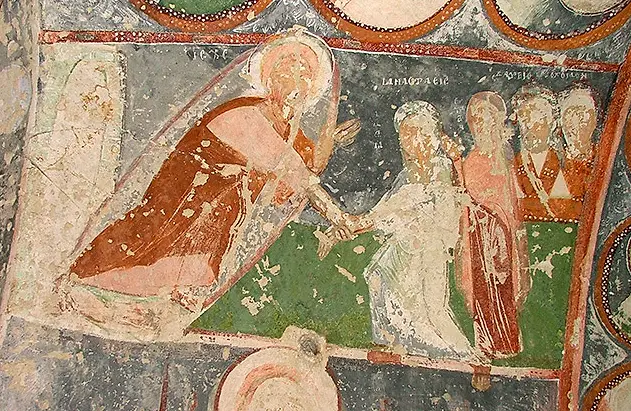
A tenth-century rock-cut church in the El Nazar valley near Göreme, painted in an archaic style with scenes from the life of Christ.
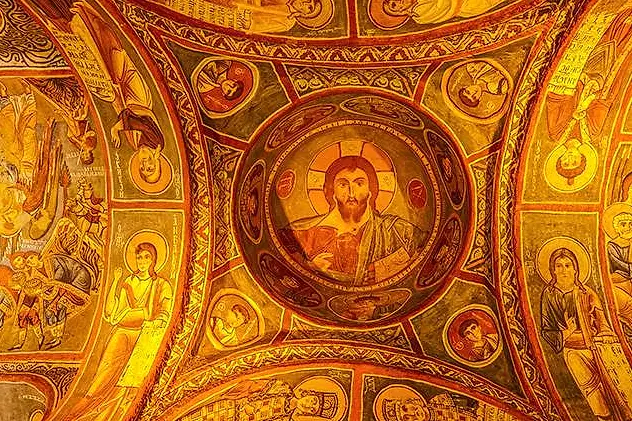
The most prized church of the Göreme Open Air Museum, a cross-plan rock church whose frescoes stayed vivid because so little light reaches them.
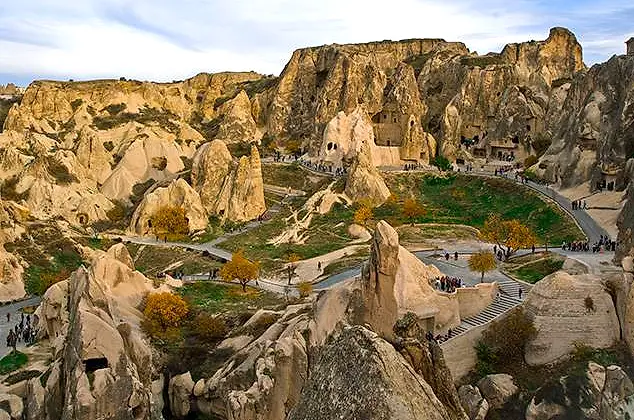
Cappadocia's best-known rock-cut monastic complex, with frescoed churches, chapels and refectories from the fourth to thirteenth centuries.
A labyrinth of tuff-carved rooms and tunnels eight levels deep at Kaymaklı, built as a refuge and still walkable on four lit levels.
Four Istanbul landmarks, each sold on its own site by the agency behind this guide — dated entry and free cancellation up to 24 hours.
The sultans’ palace on Sarayburnu: courtyards, the Imperial Council, the treasury and the terraces over the water. Dated entry, sold online on its own site.
Justinian’s great underground reservoir: 336 columns in still water and the two Medusa heads. Fast-track entry with a digital audio guide.
Justinian’s cathedral, the sultans’ mosque and a working mosque again today. The ticket admits you to the upper visitor gallery.
A nineteenth-century palace on the water’s edge: the Selamlık, the Ceremonial Hall under its chandelier, the crystal staircase and the Harem.


