
Topkapı Palace
The sultans’ palace on Sarayburnu: courtyards, the Imperial Council, the treasury and the terraces over the water. Dated entry, sold online on its own site.
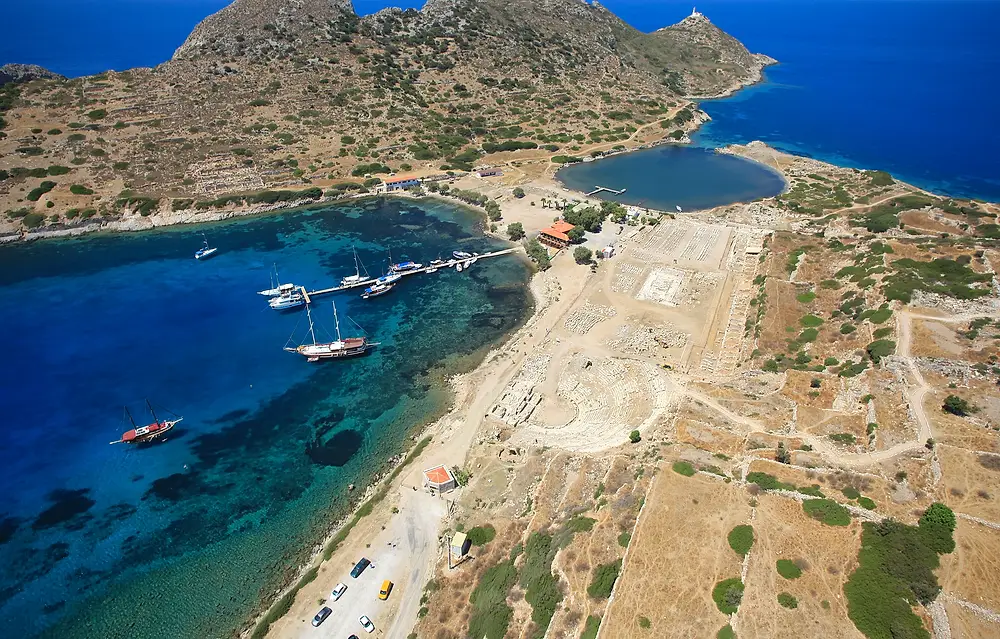
A double city at the tip of the Datça peninsula where the Aegean meets the Mediterranean, with two harbours, a grid plan, a theatre and terraced sanctuaries.
Knidos stands on Cape Tekir at the far end of the Reşadiye peninsula in Datça, where the Aegean and the Mediterranean meet. It was one of the important cities of the west Anatolian coast. Strabo described it as a double city: one part on the mainland and one on an island called Kap Krio, later joined by infill so that there are two harbours. The northern, smaller one was military, the southern one for merchant ships.
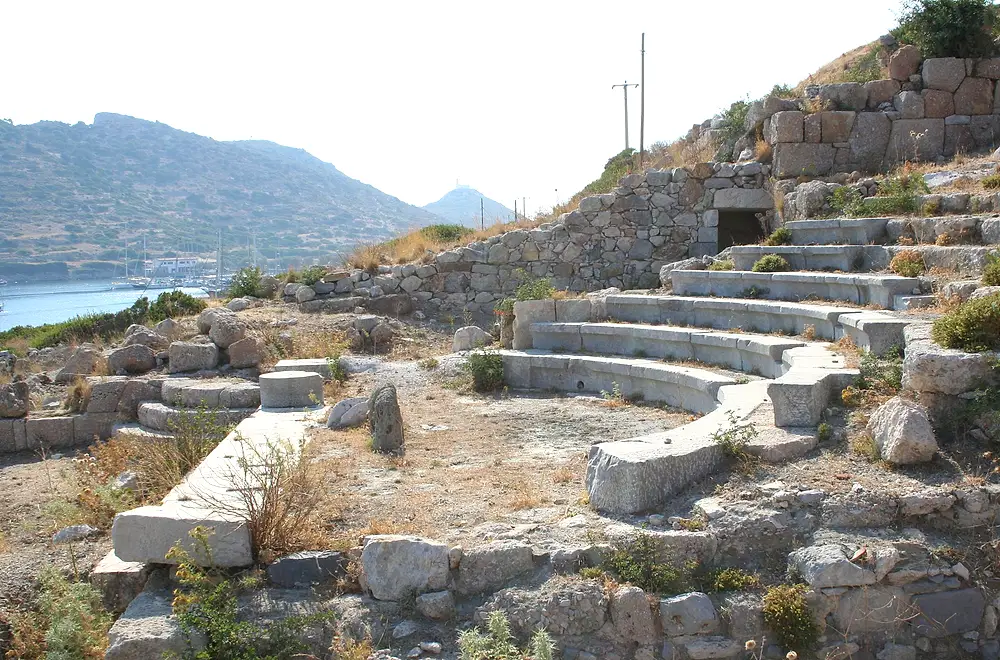
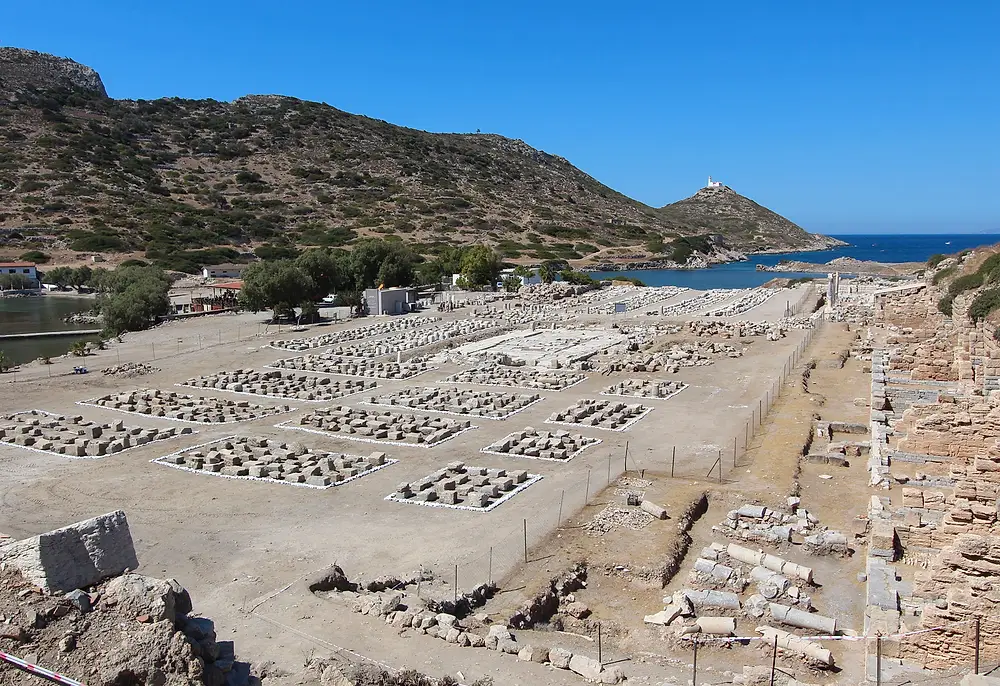
The town follows a Hippodamian grid, with four broad east-west streets crossed by a north-south avenue, adapted to steep, terraced ground with stairs. On the mainland part you can see the acropolis and walls, the Sanctuary of Demeter, the Great Theatre, an odeon and the Sanctuary of the Muses, plus seven known churches and a Hellenistic villa. There is also a Corinthian temple, a Round Temple terrace and the Apollo terrace, where the Apollo Karneios festival took place with spectators seated on the north side.
Excavation has also uncovered a large drainage system, the bouleuterion, the Pink Temple, a stoa on the northern terrace, the Harbour Street with a fountain built by a water official, and shops and workshops on Kap Krio, occupied up to about the 5th century AD. The necropolis on the east side extends over roughly 7 km.
According to the Ministry’s listing it opens at 08:30 and closes at 20:00 (last entry 19:00). Open every day.
No. This site sells no tickets. Topkapı Palace, the Basilica Cistern, Hagia Sophia and Dolmabahçe Palace are sold on our sister sites; for Knidos Archaeological Site, buy at the ticket office or on the Ministry’s official e-ticket system.
Knidos Archaeological Site is in Muğla, Türkiye — Yazı Mahallesi, Tekirburun Mevkii,.
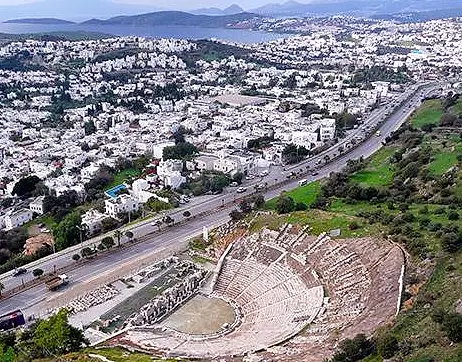
The best-preserved relic of ancient Halicarnassus, a 4th-century BC theatre on the slope of Göktepe with views of the sea, Kos and the Datça peninsula.
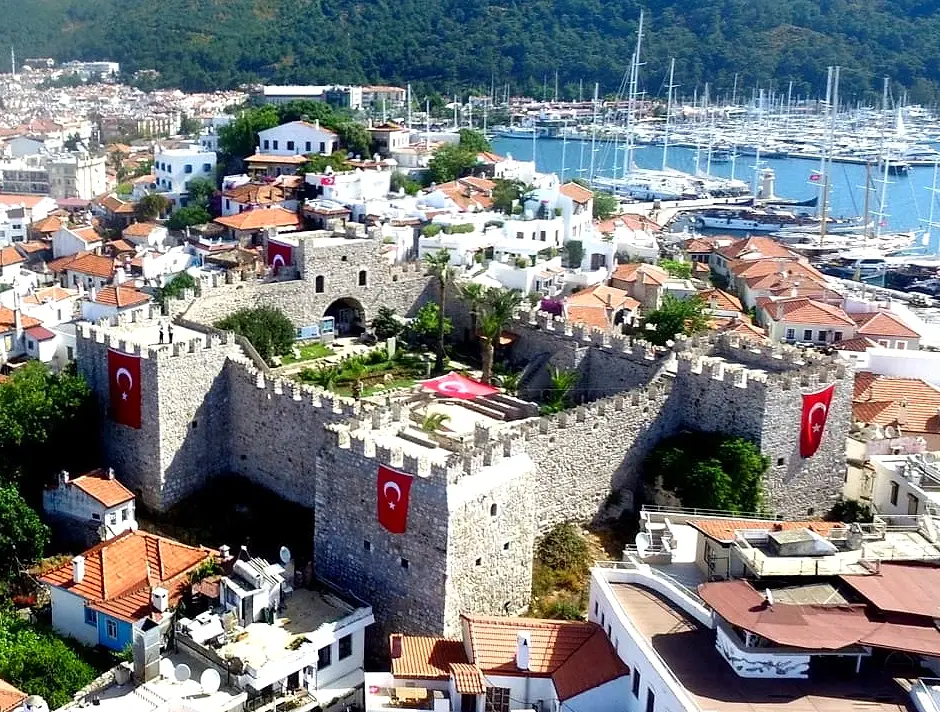
A museum inside the Ottoman castle of Marmaris, built for Süleyman the Magnificent, showing finds from Knidos, Emecik and the sea floor around the bay.
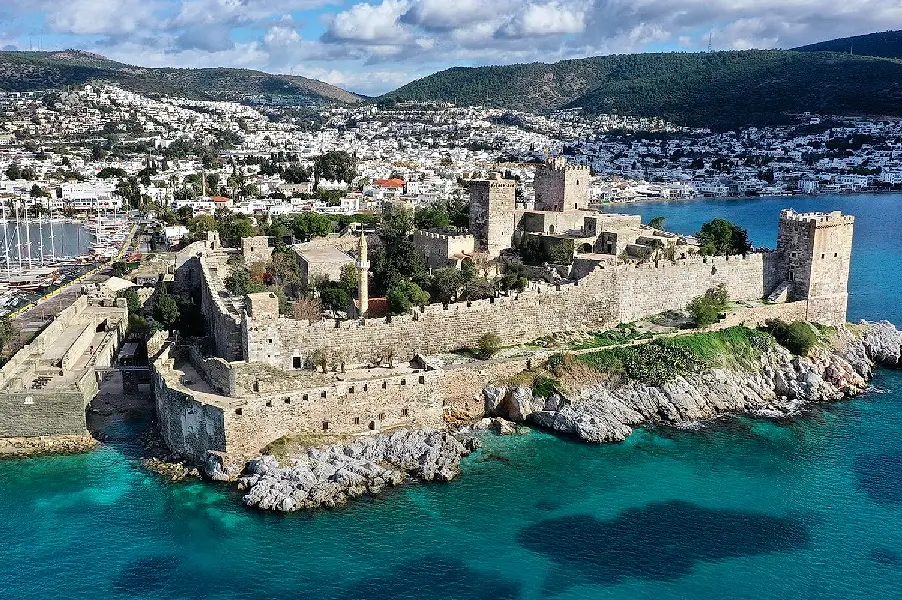
Inside Bodrum Castle, the only museum in Turkey devoted to underwater archaeology, with Bronze Age and medieval shipwreck finds, glass, and one of the world's great amphora collections.
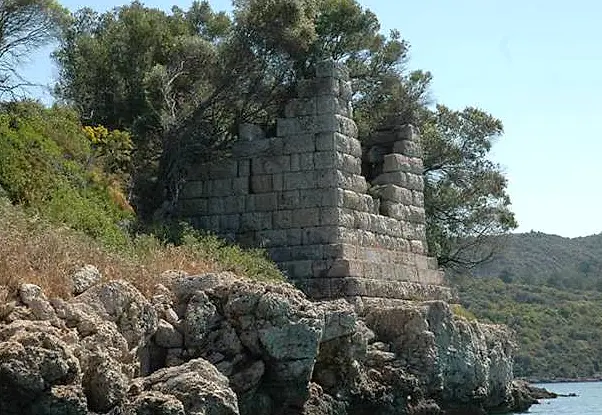
Ancient Kedrai on a protected island in the Gulf of Gökova, where ruins, a rare-sand beach and unspoilt nature share the same shore.
Four Istanbul landmarks, each sold on its own site by the agency behind this guide — dated entry and free cancellation up to 24 hours.
The sultans’ palace on Sarayburnu: courtyards, the Imperial Council, the treasury and the terraces over the water. Dated entry, sold online on its own site.
Justinian’s great underground reservoir: 336 columns in still water and the two Medusa heads. Fast-track entry with a digital audio guide.
Justinian’s cathedral, the sultans’ mosque and a working mosque again today. The ticket admits you to the upper visitor gallery.
A nineteenth-century palace on the water’s edge: the Selamlık, the Ceremonial Hall under its chandelier, the crystal staircase and the Harem.


