
Topkapı Palace
The sultans’ palace on Sarayburnu: courtyards, the Imperial Council, the treasury and the terraces over the water. Dated entry, sold online on its own site.
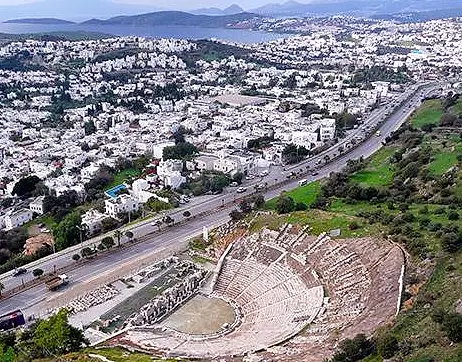
The best-preserved relic of ancient Halicarnassus, a 4th-century BC theatre on the slope of Göktepe with views of the sea, Kos and the Datça peninsula.
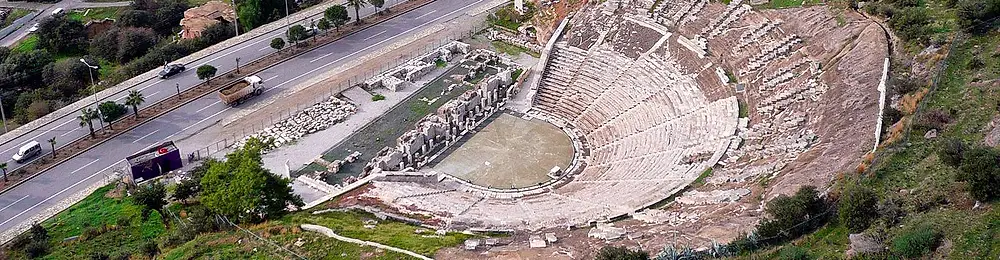
The theatre is the only building of Classical-era Bodrum, ancient Halicarnassus, to have survived to today. It leans against the southern slope of Göktepe, the hill that served as the city's necropolis to the north, and gives a wonderful view over the town and the sea as far as the island of Kos and the Datça peninsula. Dating to the 4th century BC, it belongs to the theatres of the period before the Roman Imperial Age and is among the oldest in Anatolia.
It has three parts: the seating rows (cavea), the orchestra in the middle, which is larger than a semicircle, and the stage building to the south. The lower part of the theatre has been preserved. Among its curious features are an altar where sacrifices were made to Dionysos before performances, and holes between some seats, perhaps used for shade.
After a major restoration, the theatre reopened to the public in 2002, and it still hosts many of Bodrum's festivals and concerts.
According to the Ministry’s listing it opens at 08:30 and closes at 17:30 (last entry 17:00). Closed: Monday.
No. This site sells no tickets. Topkapı Palace, the Basilica Cistern, Hagia Sophia and Dolmabahçe Palace are sold on our sister sites; for Bodrum Ancient Theatre, buy at the ticket office or on the Ministry’s official e-ticket system.
Bodrum Ancient Theatre is in Muğla, Türkiye — Yeniköy Mahallesi, Çevre Yolu Kıbrıs Şehitleri Cad., 48440.
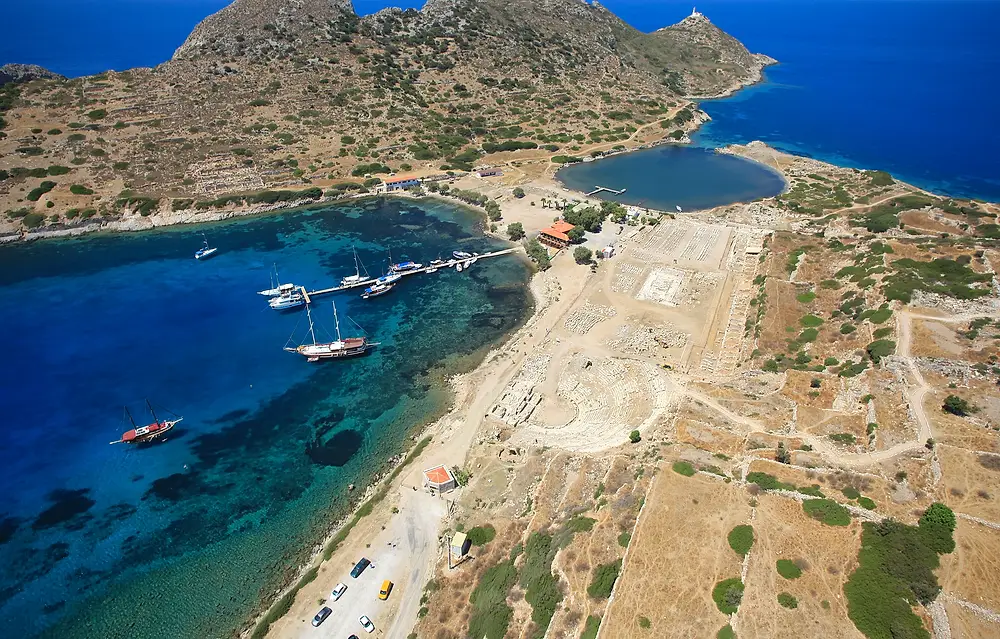
A double city at the tip of the Datça peninsula where the Aegean meets the Mediterranean, with two harbours, a grid plan, a theatre and terraced sanctuaries.
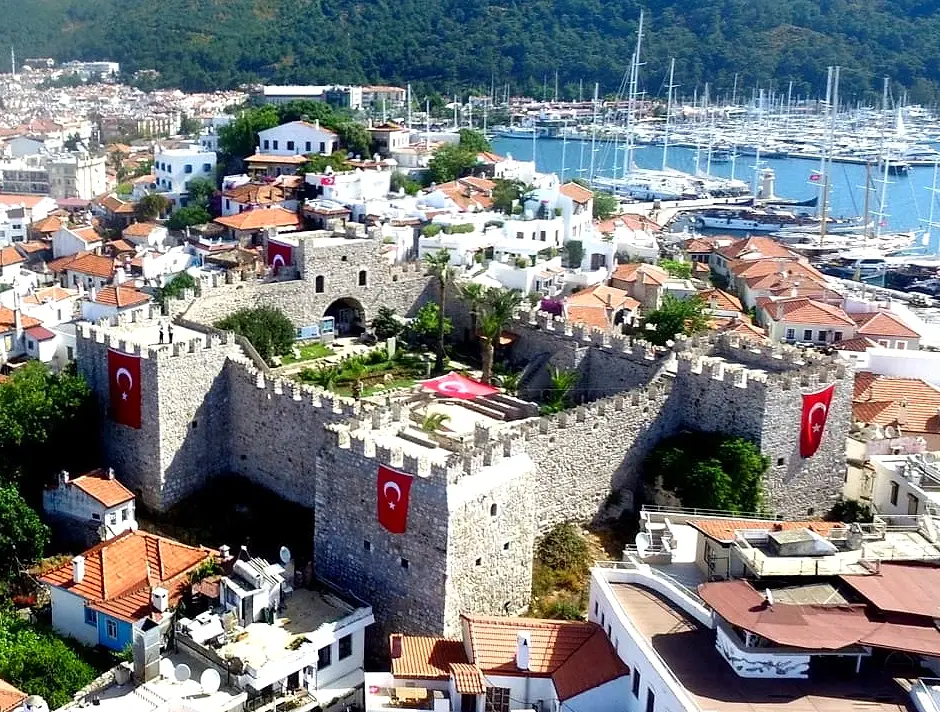
A museum inside the Ottoman castle of Marmaris, built for Süleyman the Magnificent, showing finds from Knidos, Emecik and the sea floor around the bay.
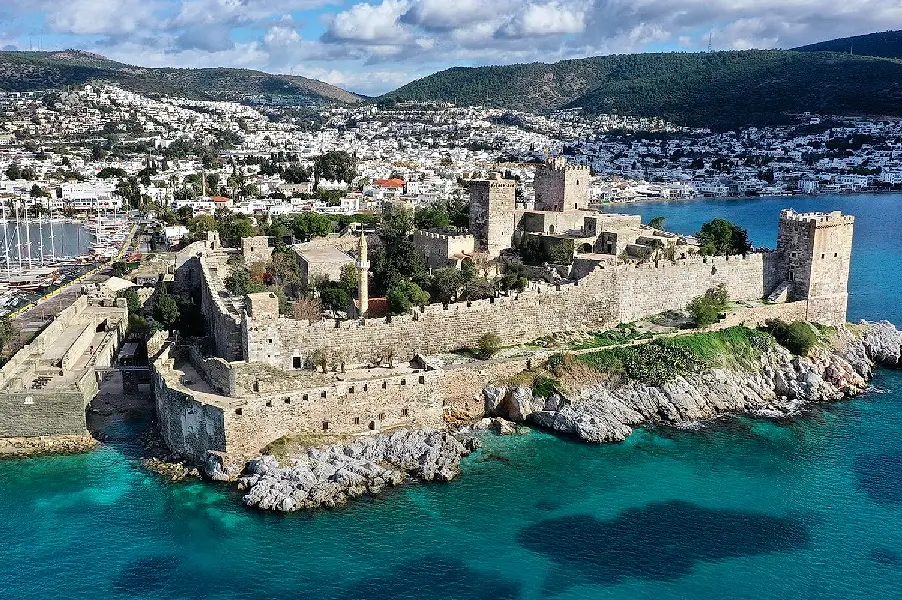
Inside Bodrum Castle, the only museum in Turkey devoted to underwater archaeology, with Bronze Age and medieval shipwreck finds, glass, and one of the world's great amphora collections.
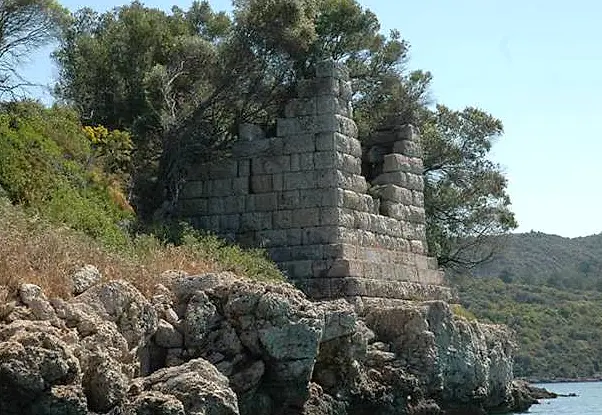
Ancient Kedrai on a protected island in the Gulf of Gökova, where ruins, a rare-sand beach and unspoilt nature share the same shore.
Four Istanbul landmarks, each sold on its own site by the agency behind this guide — dated entry and free cancellation up to 24 hours.
The sultans’ palace on Sarayburnu: courtyards, the Imperial Council, the treasury and the terraces over the water. Dated entry, sold online on its own site.
Justinian’s great underground reservoir: 336 columns in still water and the two Medusa heads. Fast-track entry with a digital audio guide.
Justinian’s cathedral, the sultans’ mosque and a working mosque again today. The ticket admits you to the upper visitor gallery.
A nineteenth-century palace on the water’s edge: the Selamlık, the Ceremonial Hall under its chandelier, the crystal staircase and the Harem.


