
Topkapı Palace
The sultans’ palace on Sarayburnu: courtyards, the Imperial Council, the treasury and the terraces over the water. Dated entry, sold online on its own site.
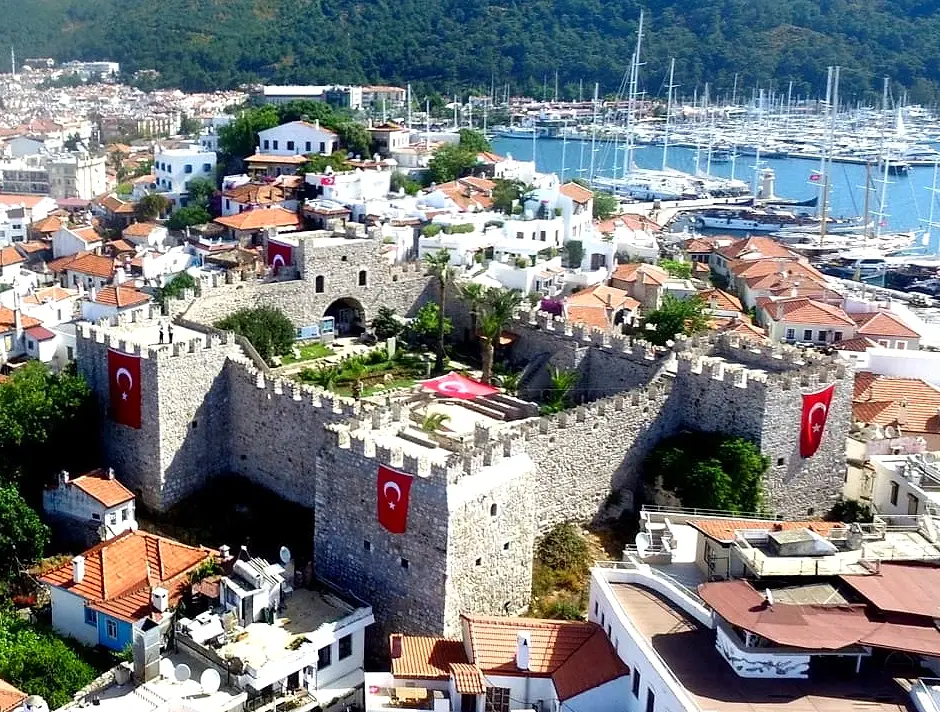
A museum inside the Ottoman castle of Marmaris, built for Süleyman the Magnificent, showing finds from Knidos, Emecik and the sea floor around the bay.
The Marmaris Museum occupies the castle on the peninsula overlooking the sea. The earliest information on a fortress here is given by Herodotus of Halicarnassus, and the 17th-century traveller Evliya Çelebi writes that the present castle was built in 1522 by order of Süleyman the Magnificent during the Rhodes campaign and used as a military base. He also mentions large cut stone blocks at the foundations, which are the remains of a Hellenistic castle about 2,000 years old and can still be seen. The Ottoman building inscription is still in place.
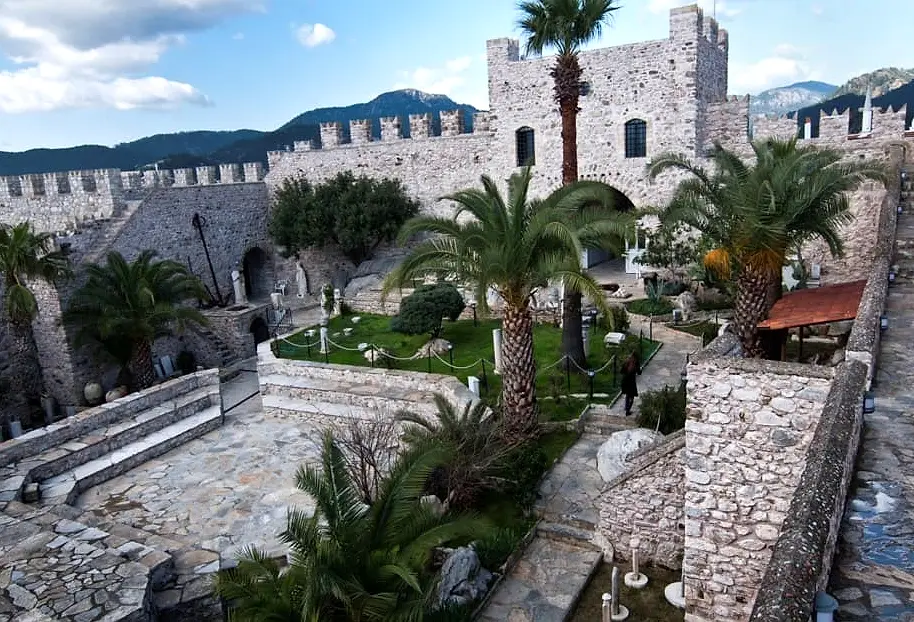
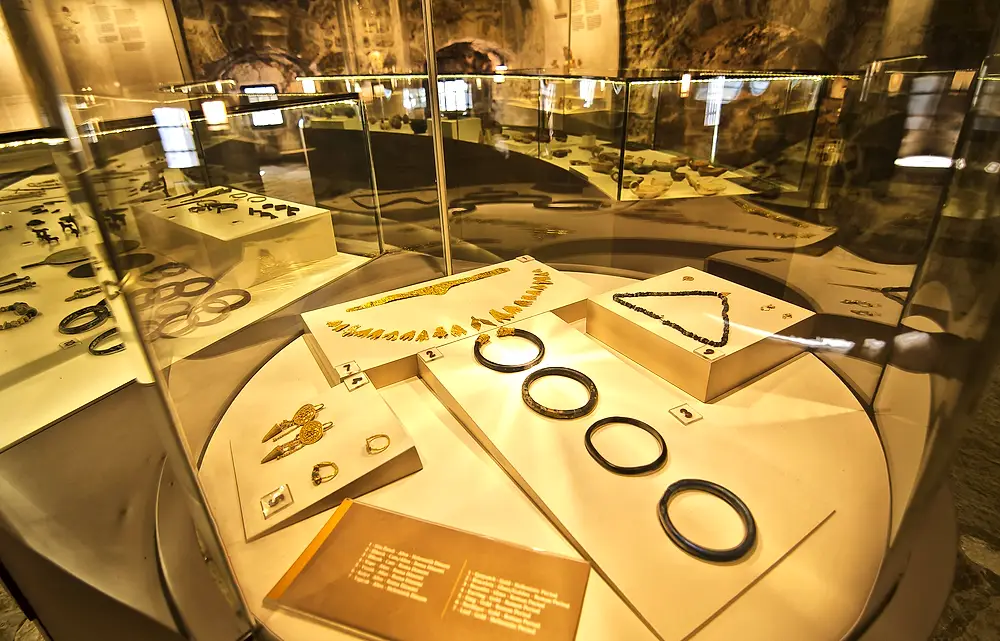
For decades before the restoration of the 1980s, houses stood inside the castle. Since restoration finished in 1991, it has served as a museum. The castle has seven closed spaces; four of them and the courtyard display objects from the Bronze Age, Archaic, Classical, Hellenistic, Roman, Eastern Roman and Ottoman periods.
The collection includes finds from the ancient city of Knidos on the Datça peninsula, from excavations at Burgaz and the Apollo sanctuary at Emecik, and a few rare pieces that came to the museum by other routes. The garden shows altars, columns and capitals, Ottoman tombstones, cannons and cannonballs, and an important group of amphorae and vessels recovered from under the sea.
According to the Ministry’s listing it opens at 08:30 and closes at 18:45. Open every day.
No. This site sells no tickets. Topkapı Palace, the Basilica Cistern, Hagia Sophia and Dolmabahçe Palace are sold on our sister sites; for Marmaris Museum, buy at the ticket office or on the Ministry’s official e-ticket system.
Marmaris Museum is in Muğla, Türkiye — Tepe Mah. Kaleiçi Mevkii.
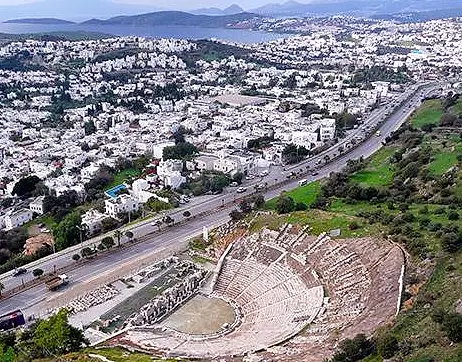
The best-preserved relic of ancient Halicarnassus, a 4th-century BC theatre on the slope of Göktepe with views of the sea, Kos and the Datça peninsula.
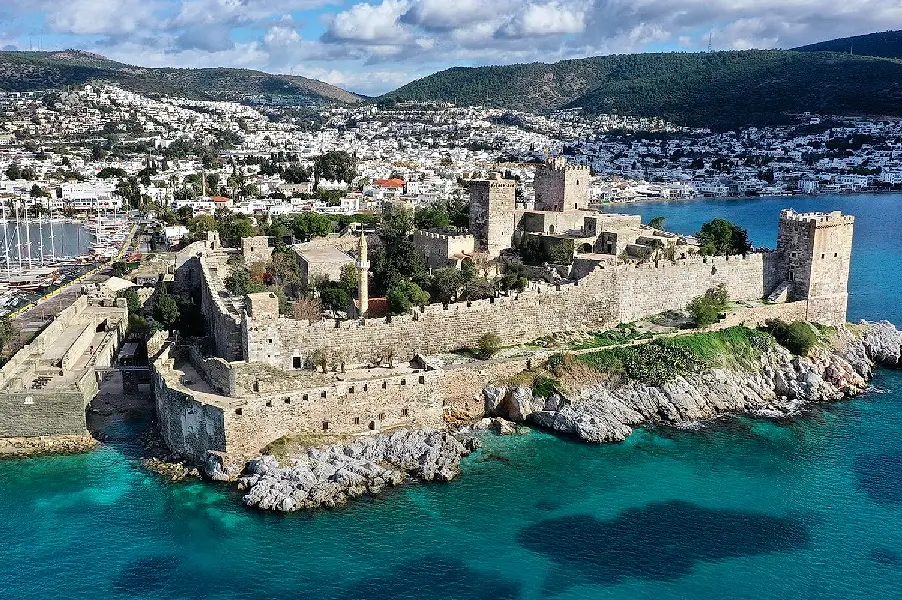
Inside Bodrum Castle, the only museum in Turkey devoted to underwater archaeology, with Bronze Age and medieval shipwreck finds, glass, and one of the world's great amphora collections.
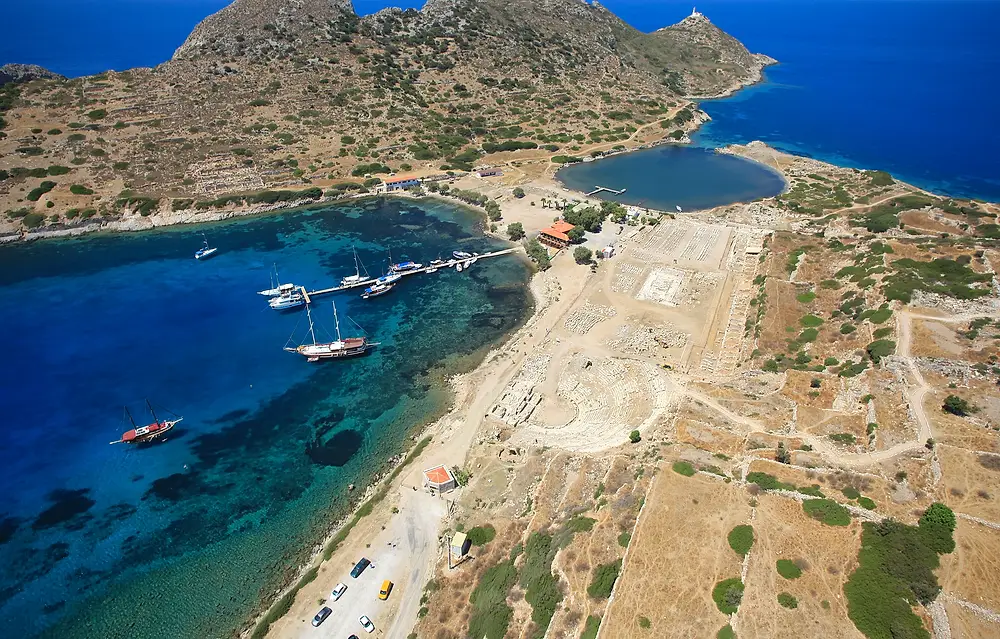
A double city at the tip of the Datça peninsula where the Aegean meets the Mediterranean, with two harbours, a grid plan, a theatre and terraced sanctuaries.
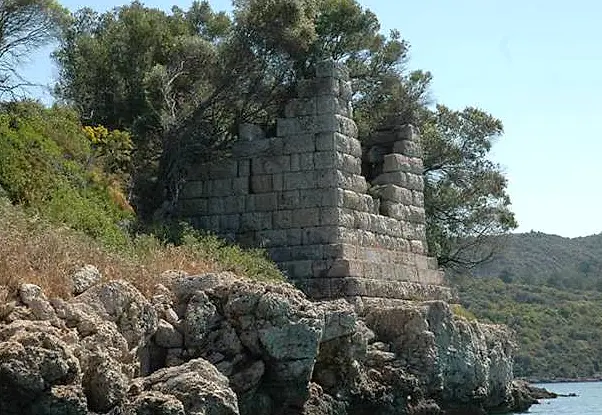
Ancient Kedrai on a protected island in the Gulf of Gökova, where ruins, a rare-sand beach and unspoilt nature share the same shore.
Four Istanbul landmarks, each sold on its own site by the agency behind this guide — dated entry and free cancellation up to 24 hours.
The sultans’ palace on Sarayburnu: courtyards, the Imperial Council, the treasury and the terraces over the water. Dated entry, sold online on its own site.
Justinian’s great underground reservoir: 336 columns in still water and the two Medusa heads. Fast-track entry with a digital audio guide.
Justinian’s cathedral, the sultans’ mosque and a working mosque again today. The ticket admits you to the upper visitor gallery.
A nineteenth-century palace on the water’s edge: the Selamlık, the Ceremonial Hall under its chandelier, the crystal staircase and the Harem.


