
Topkapı Palace
The sultans’ palace on Sarayburnu: courtyards, the Imperial Council, the treasury and the terraces over the water. Dated entry, sold online on its own site.
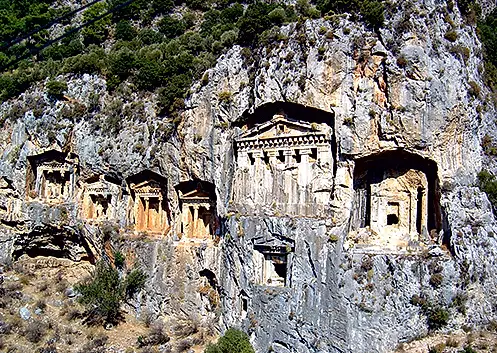
A Carian port city near Dalyan, famous for rock-cut tombs facing the river, with a theatre, Roman baths and an acropolis on a 152 m hill.
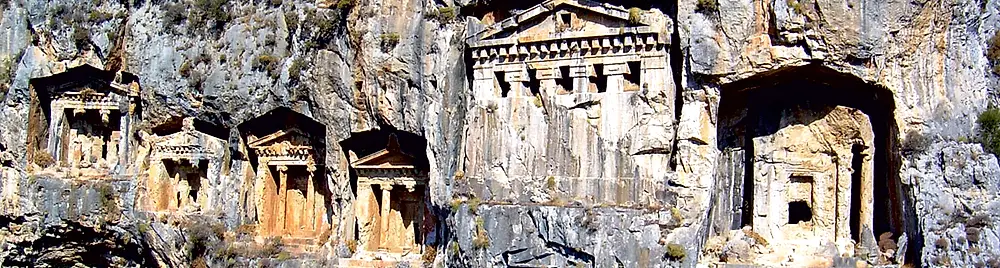
Kaunos is one of Türkiye's most striking ancient sites, best known for the rock-cut tombs carved into the cliffs above the Dalyan river. It began as a busy trading harbour, but silt slowly filled the bay and left the port high and dry, so the city lost its reason for being.
The acropolis stands on a hill 152 metres high. Long defensive walls run from the north side of the harbour to the steep rock beyond Dalyan village. Parts of them date from different eras: the walls toward the harbour go back to the Archaic period, the north-western stretch is Hellenistic, and the northern circuit is medieval. One section was built under Mausolos, the Carian satrap whose famous tomb stood at Halicarnassus, now Bodrum.
At the foot of the acropolis lies the theatre. Nearby you can find the remains of a basilica-type church, a Roman bath and a temple. The rock tombs, cut in the 4th century BC and reused in Roman times, are visible from Dalyan. From the landing stage you can also see hollows in the rock where great fires were lit as beacons for ships heading to the ancient port.
According to the Ministry’s listing it opens at 08:30 and closes at 18:00 (last entry 17:30). Open every day.
No. This site sells no tickets. Topkapı Palace, the Basilica Cistern, Hagia Sophia and Dolmabahçe Palace are sold on our sister sites; for Kaunos Ancient City, buy at the ticket office or on the Ministry’s official e-ticket system.
Kaunos Ancient City is in Muğla, Türkiye — Dalyan Beldesi, 48800.
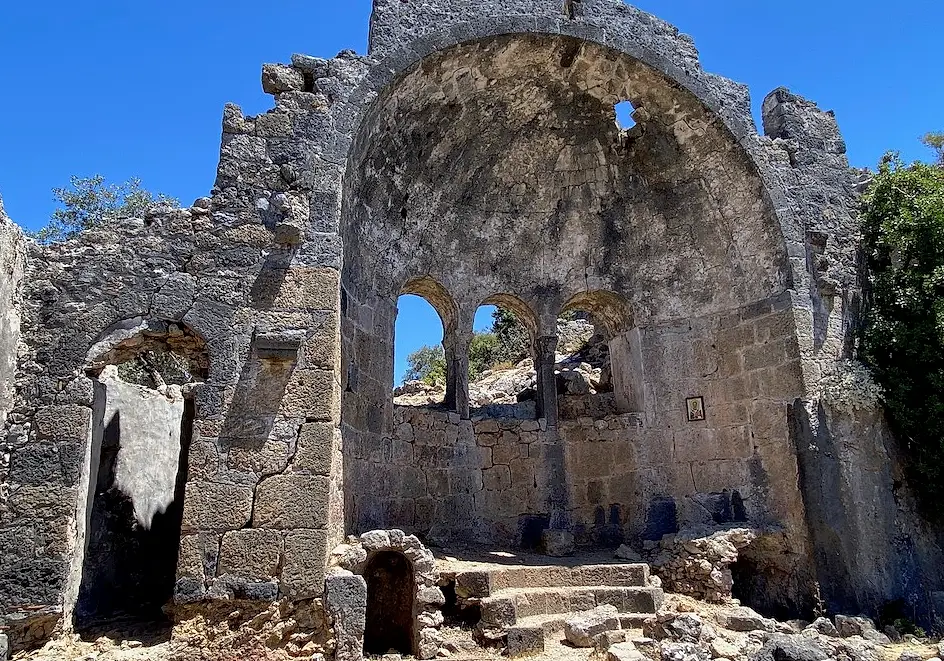
A small island at the southern end of Fethiye Bay with Byzantine church ruins, tombs and a sacred hilltop, reached by boat.
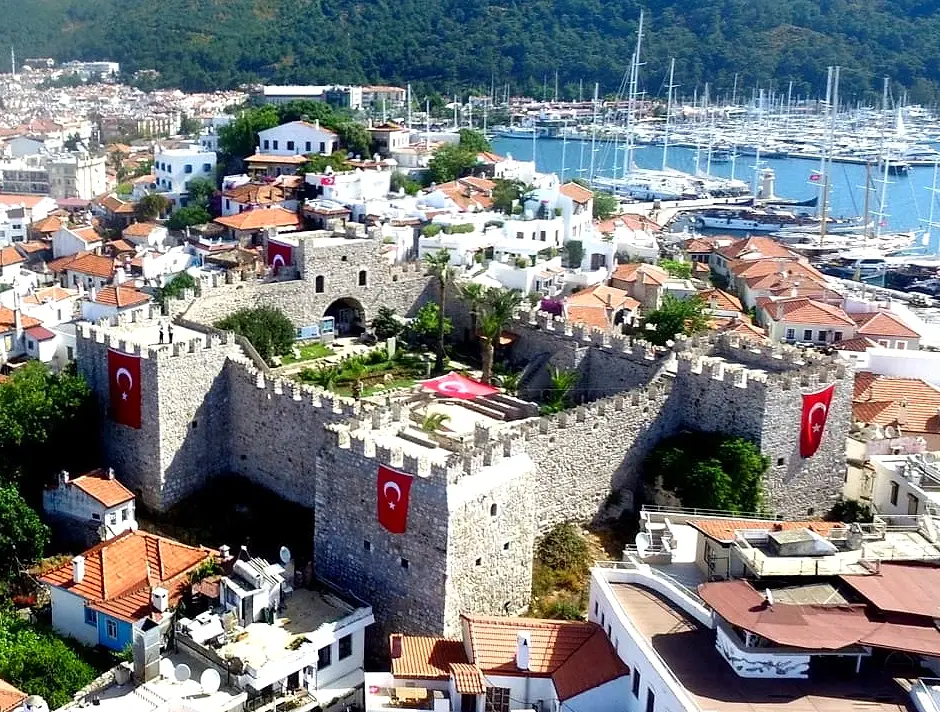
A museum inside the Ottoman castle of Marmaris, built for Süleyman the Magnificent, showing finds from Knidos, Emecik and the sea floor around the bay.
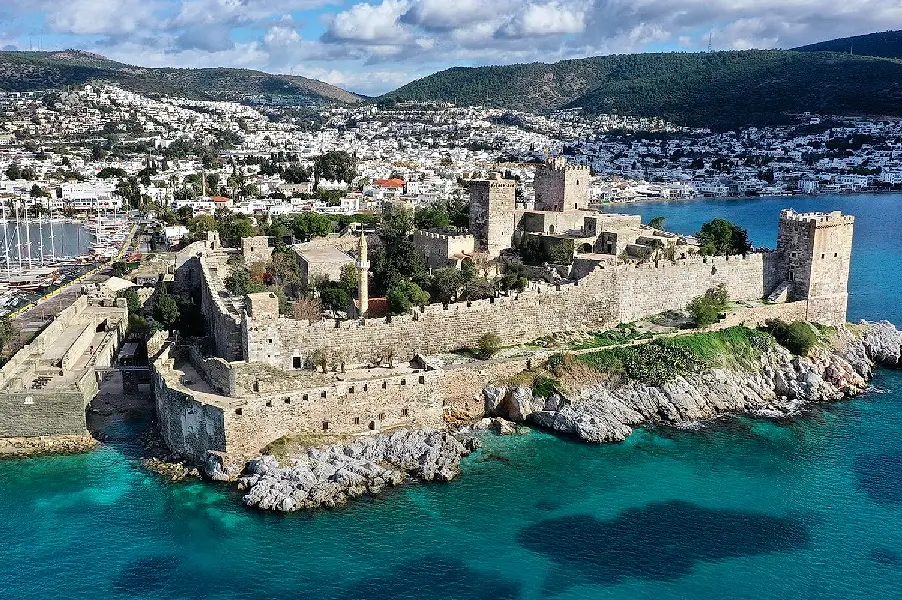
Inside Bodrum Castle, the only museum in Turkey devoted to underwater archaeology, with Bronze Age and medieval shipwreck finds, glass, and one of the world's great amphora collections.
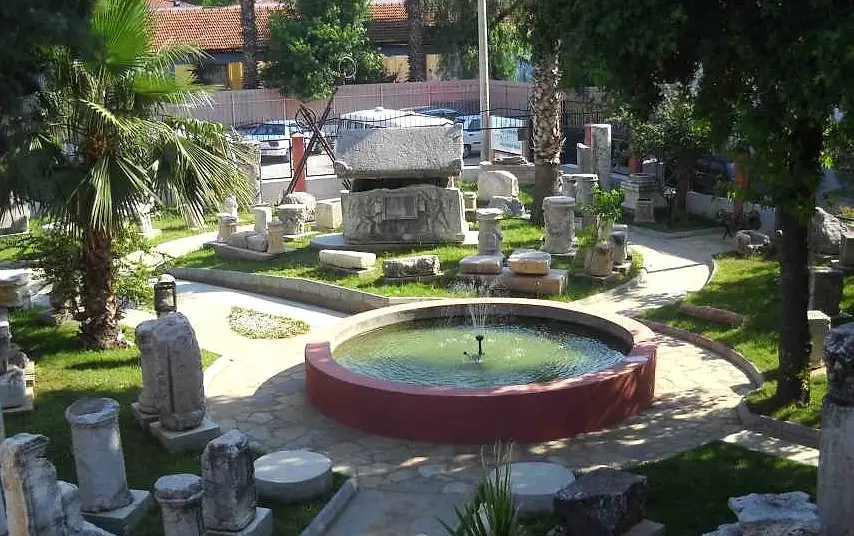
Fethiye's museum of archaeology and ethnography, home to a famous trilingual Lycian stele; currently listed as closed to visitors.
Four Istanbul landmarks, each sold on its own site by the agency behind this guide — dated entry and free cancellation up to 24 hours.
The sultans’ palace on Sarayburnu: courtyards, the Imperial Council, the treasury and the terraces over the water. Dated entry, sold online on its own site.
Justinian’s great underground reservoir: 336 columns in still water and the two Medusa heads. Fast-track entry with a digital audio guide.
Justinian’s cathedral, the sultans’ mosque and a working mosque again today. The ticket admits you to the upper visitor gallery.
A nineteenth-century palace on the water’s edge: the Selamlık, the Ceremonial Hall under its chandelier, the crystal staircase and the Harem.


