
Topkapı Palace
The sultans’ palace on Sarayburnu: courtyards, the Imperial Council, the treasury and the terraces over the water. Dated entry, sold online on its own site.
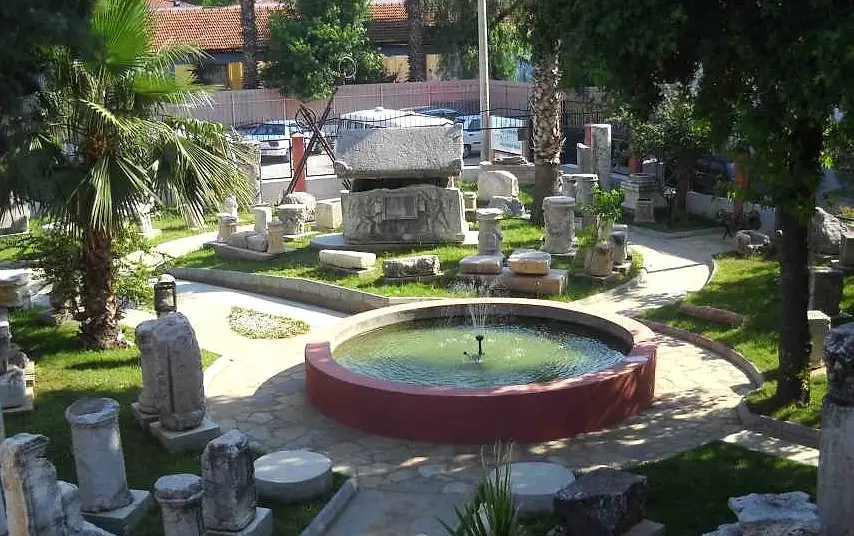
Fethiye's museum of archaeology and ethnography, home to a famous trilingual Lycian stele; currently listed as closed to visitors.
On September 30, 2026 the Ministry’s listing showed this museum as closed to visitors. Check the official page before planning a visit.
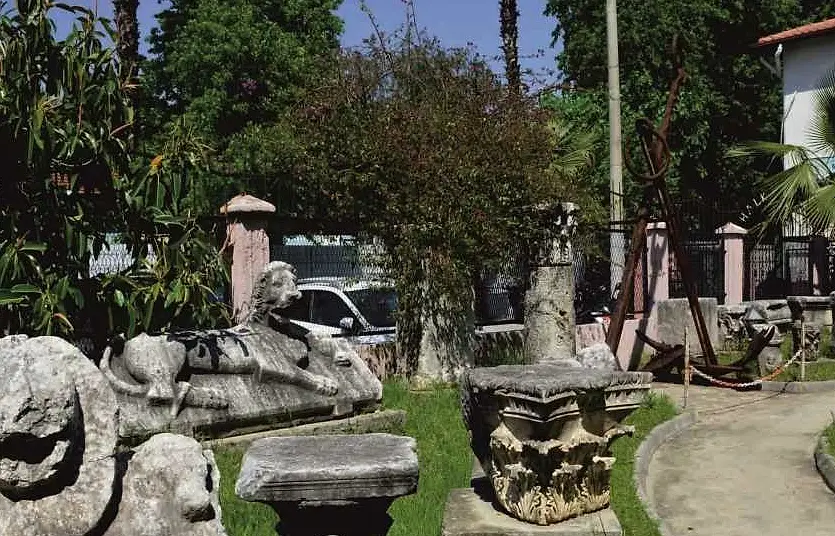
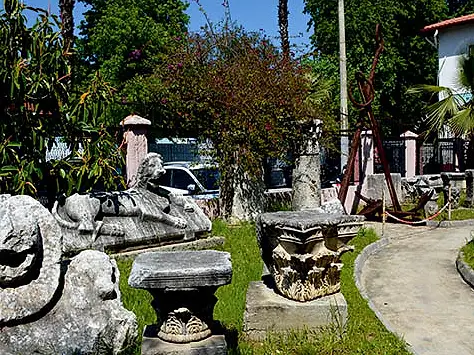
The idea of showing the archaeological wealth of Fethiye's district in one place goes back to the early 1960s, and the first nucleus of a collection was gathered in those years. Large stone pieces collected in the region were later kept in a depot, and in 1987, with a new building, the artefacts were presented in the modern manner. The museum has two halls, one for archaeology and one for ethnography, and nearly everything in them comes from Fethiye and its surroundings.
Pottery makes up most of the archaeological display, arranged in chronological order from the 3rd millennium BC to the end of the Byzantine age. The most important piece is the trilingual stele found at Letoon in 1973, written in Lycian, Aramaic and Greek, which helped decipher the Lycian language. Another key exhibit is the statue of the girl with the dove, together with two female statues beside it, linked to the cult of Artemis.
The ethnography hall shows local hand-woven textiles, embroidery, caftans, üçetek skirts and silver jewellery.
According to the Ministry’s listing it opens at 08:30 and closes at 18:00 (last entry 17:30).
No. This site sells no tickets. Topkapı Palace, the Basilica Cistern, Hagia Sophia and Dolmabahçe Palace are sold on our sister sites; for Fethiye Museum, buy at the ticket office or on the Ministry’s official e-ticket system.
Fethiye Museum is in Muğla, Türkiye — Kesikkapı Mahallesi 505 Sokak No:4 48300.
Four Istanbul landmarks, each sold on its own site by the agency behind this guide — dated entry and free cancellation up to 24 hours.
The sultans’ palace on Sarayburnu: courtyards, the Imperial Council, the treasury and the terraces over the water. Dated entry, sold online on its own site.
Justinian’s great underground reservoir: 336 columns in still water and the two Medusa heads. Fast-track entry with a digital audio guide.
Justinian’s cathedral, the sultans’ mosque and a working mosque again today. The ticket admits you to the upper visitor gallery.
A nineteenth-century palace on the water’s edge: the Selamlık, the Ceremonial Hall under its chandelier, the crystal staircase and the Harem.


