
Topkapı Palace
The sultans’ palace on Sarayburnu: courtyards, the Imperial Council, the treasury and the terraces over the water. Dated entry, sold online on its own site.
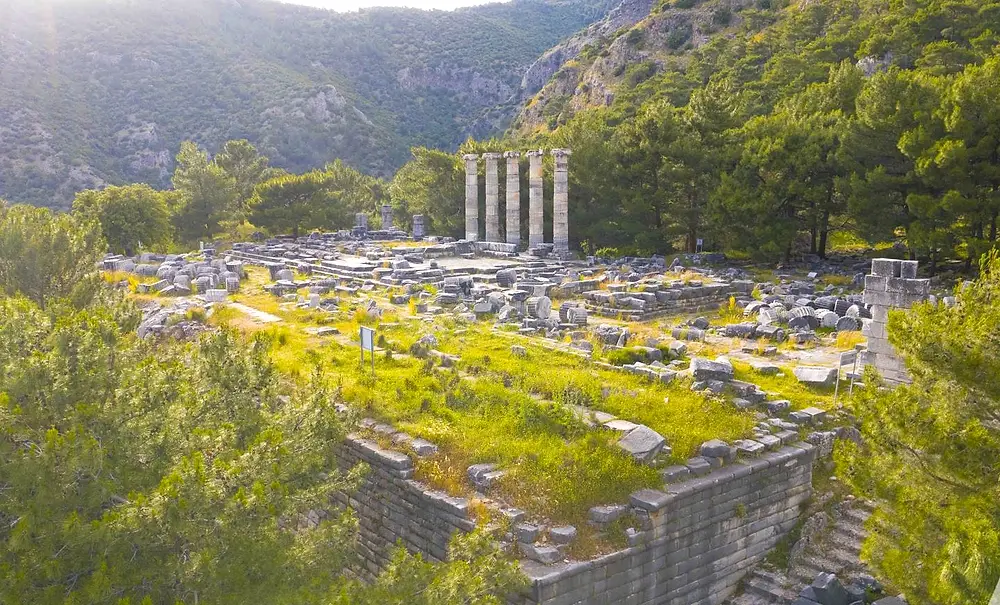
A Hellenistic city laid out on a strict grid on a terrace above the Maeander plain, with a temple of Athena, a well-preserved theatre and stepped streets.
Priene stands near Güllübahçe in Aydın province, and the German Archaeological Institute still excavates and studies it. The settlement goes back to the 2nd millennium BC, though what we know about its first foundation is still largely assumption. In the Hellenistic period it passed between the Ptolemaic and Seleucid kingdoms and Pergamon. After the death of Attalus II in 133 BC it joined Rome by his will. In Byzantine times it was a bishopric, and then was abandoned for good.
What makes Priene special is its plan. It is often called the finest example of ancient town planning: the streets follow the grid system developed by the Milesian architect Hippodamos, and because the ground slopes, the side streets, mostly about 3.5 metres wide, are stepped. Public buildings stand on terraces above.
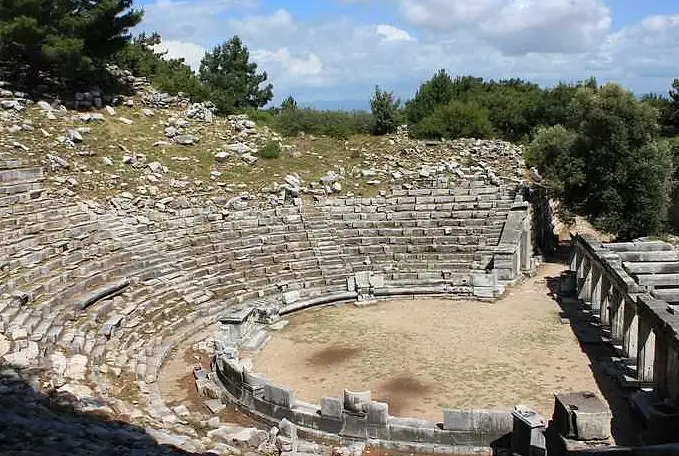
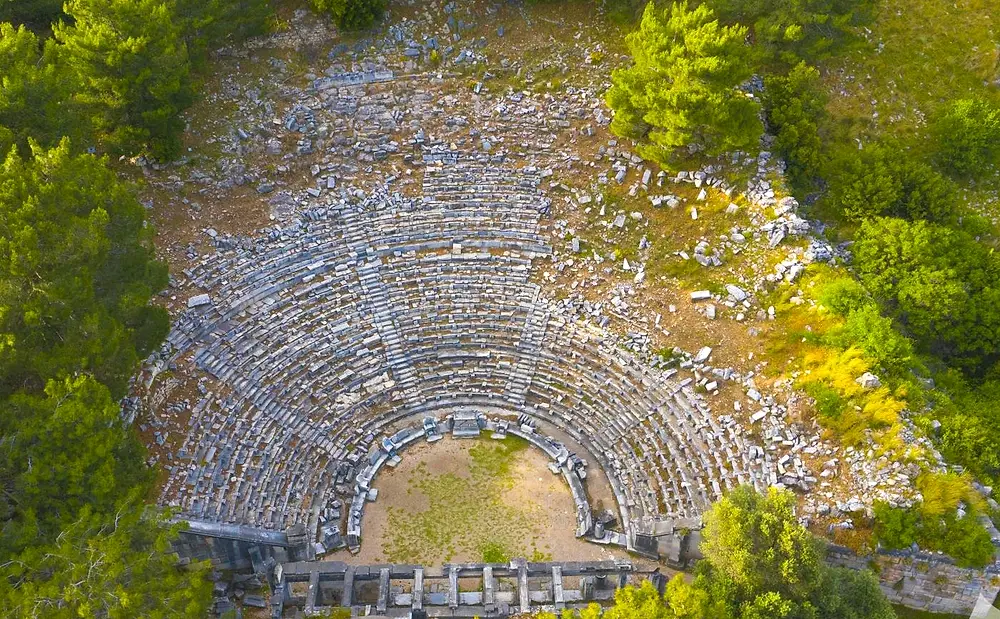
The Athena Sanctuary is entered through a monumental gate, with an altar of the 2nd century BC and the temple beyond, where only the base of the cult statue survives. The architect Pytheos designed it using a single module for every measurement, a new idea in temple building. The theatre is the only one in western Anatolia that did not receive major additions in Roman times, and the altar of Dionysus still stands there.
According to the Ministry’s listing it opens at 08:30 and closes at 17:30 (last entry 17:00). Open every day.
No. This site sells no tickets. Topkapı Palace, the Basilica Cistern, Hagia Sophia and Dolmabahçe Palace are sold on our sister sites; for Priene Archaeological Site, buy at the ticket office or on the Ministry’s official e-ticket system.
Priene Archaeological Site is in Aydın, Türkiye — Didim.
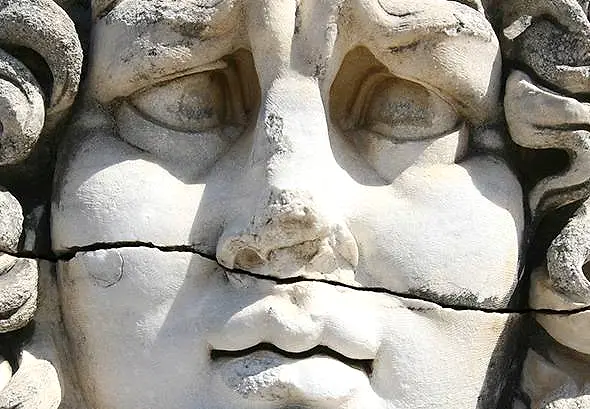
One of the largest Ionic temples of the ancient world, an oracle sanctuary of Apollo at Didyma with forests of columns and a Medusa-head guardian.
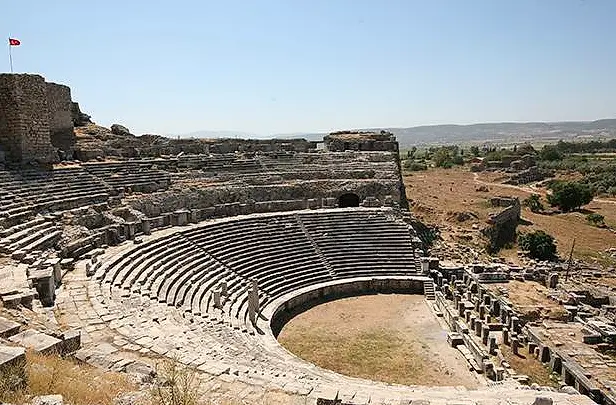
Once a busy Ionian harbour city, Miletus now lies among fields in Aydın, with its great theatre, bath ruins and the Lion Harbour monument still to walk through.
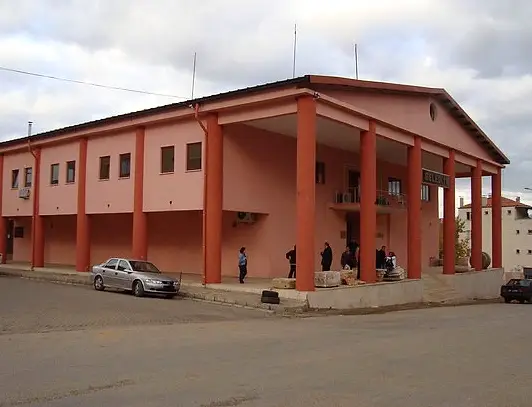
A small ethnography museum in Karacasu, Aydın, showing objects from the recent past of the town and region, including traditional crafts.
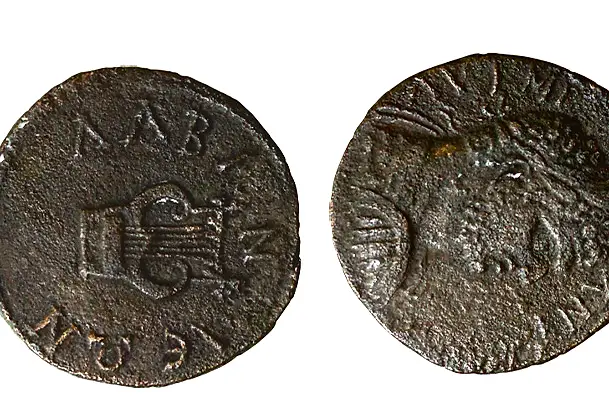
A Carian city near Çine in Aydın, famed in antiquity for its wealth, with remains of a theatre, aqueduct, council house and necropolis.
Four Istanbul landmarks, each sold on its own site by the agency behind this guide — dated entry and free cancellation up to 24 hours.
The sultans’ palace on Sarayburnu: courtyards, the Imperial Council, the treasury and the terraces over the water. Dated entry, sold online on its own site.
Justinian’s great underground reservoir: 336 columns in still water and the two Medusa heads. Fast-track entry with a digital audio guide.
Justinian’s cathedral, the sultans’ mosque and a working mosque again today. The ticket admits you to the upper visitor gallery.
A nineteenth-century palace on the water’s edge: the Selamlık, the Ceremonial Hall under its chandelier, the crystal staircase and the Harem.


