
Topkapı Palace
The sultans’ palace on Sarayburnu: courtyards, the Imperial Council, the treasury and the terraces over the water. Dated entry, sold online on its own site.
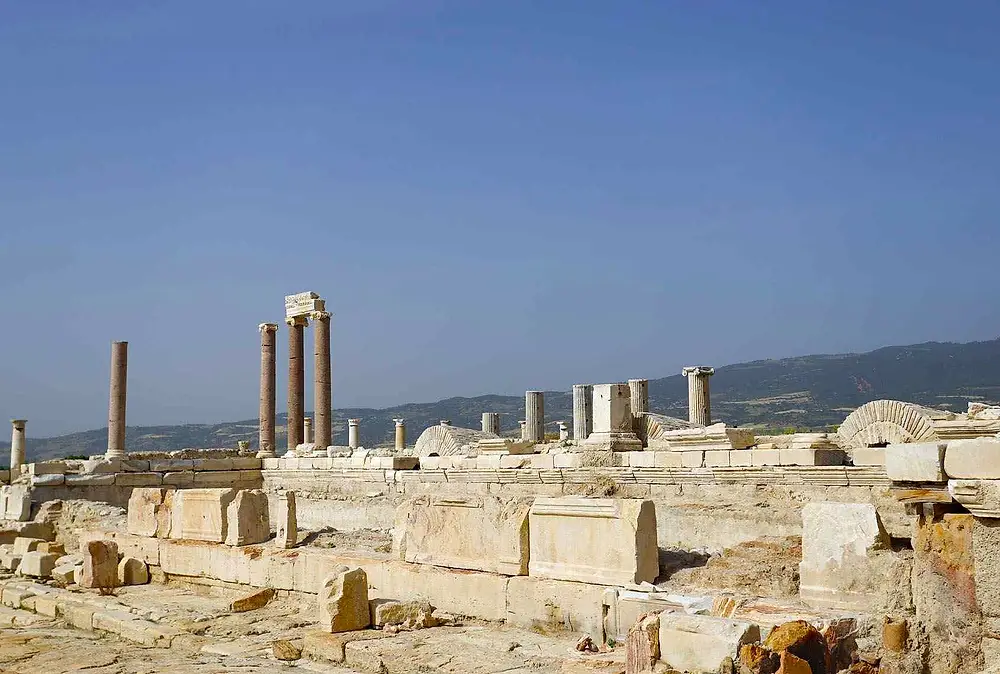
An ancient city on the trade road in the Lykos valley, still being excavated, with a colonnaded street, agora, church and monumental fountain.
Tripolis lies in Yenicekent, in Denizli's Buldan district, at the north-western end of the Lykos (Çürüksu) valley. Its public and civic buildings spread over about three square kilometres on the southern slope of a hill that dominates the valley. Surveys at the nearby mounds of Hamambükü and Yenice/Akkaya show that people lived in this area as early as the Late Neolithic and Early Chalcolithic.
The city's importance came from the road. Two routes starting at Pergamon and Smyrna joined at Sardis, reached Tripolis via Philadelphia, and then went on towards Hierapolis and Laodikeia and into inner Anatolia. The city first appears in the Hellenistic era as Apollonia and was briefly called Antoniopolis after Mark Antony's visit in 41 BC. Coins from Augustus onwards all read Tripolis. After Pergamon's victory at Magnesia, the region came under Attalid rule and passed to Rome when Attalos III died in 133 BC.
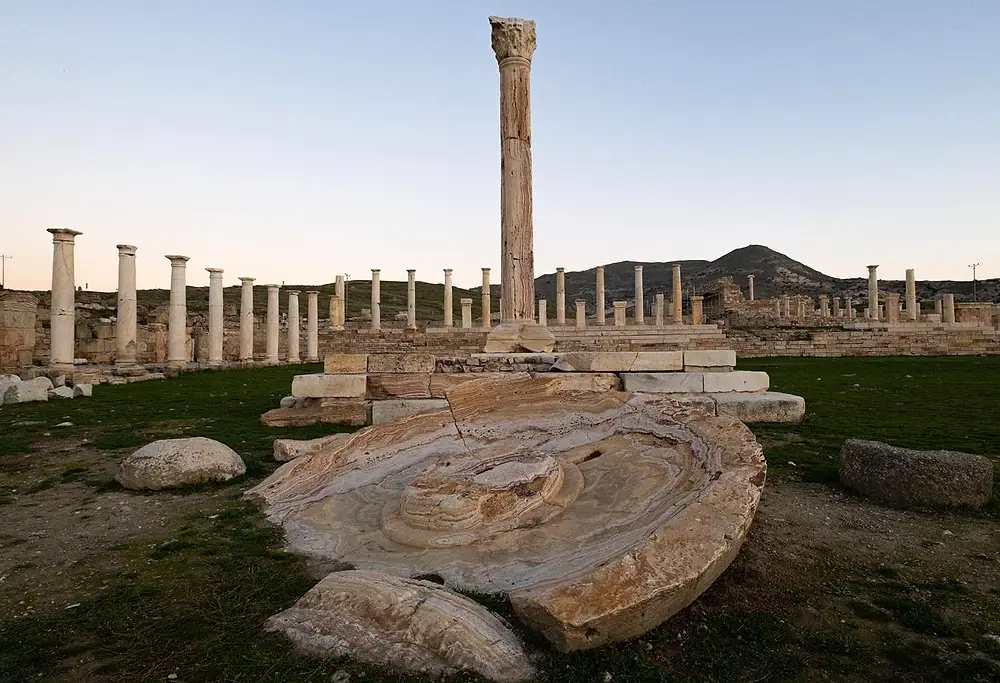
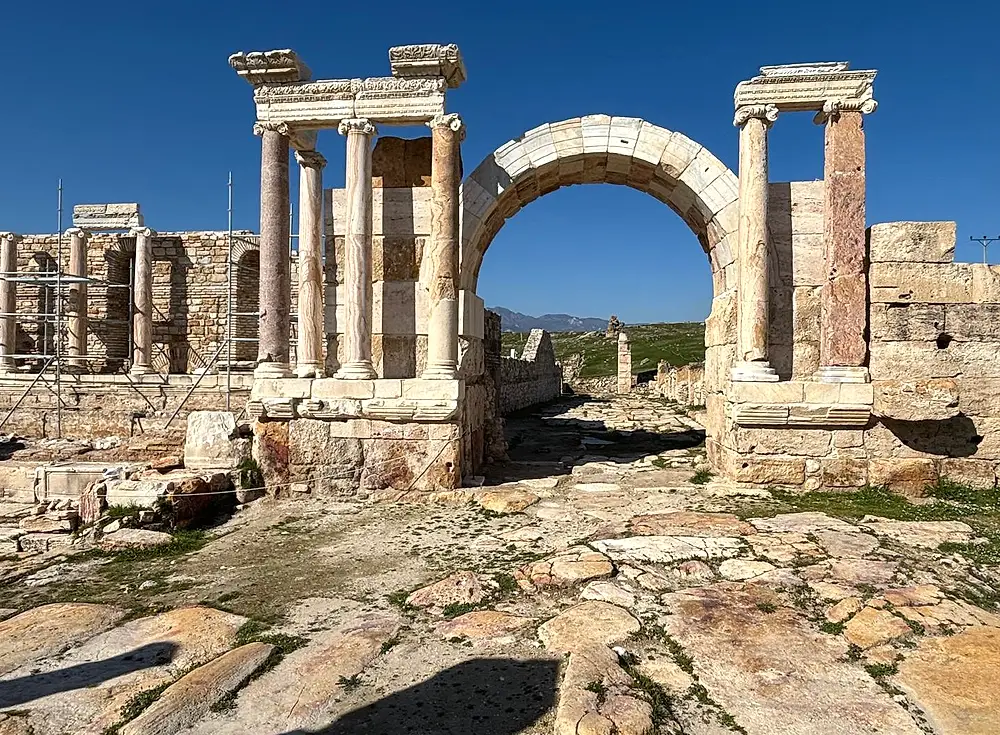
Excavations, run since 2012 under Prof. Dr. Bahadır Duman for the Ministry of Culture and Tourism and Pamukkale University, have excavated and restored many buildings in the city centre. They include a residential quarter, a church, a colonnaded street, a monumental fountain, the main street, a vaulted structure, a podium building, the agora, an arched building, shops and a sanctuary.
According to the Ministry’s listing it opens at 08:00 and closes at 17:30 (last entry 17:00). Open every day.
No. This site sells no tickets. Topkapı Palace, the Basilica Cistern, Hagia Sophia and Dolmabahçe Palace are sold on our sister sites; for Denizli Tripolis Archaeological Site, buy at the ticket office or on the Ministry’s official e-ticket system.
Denizli Tripolis Archaeological Site is in Denizli, Türkiye — Yenicekent mah, Buldan, Denizli/Türkiye.
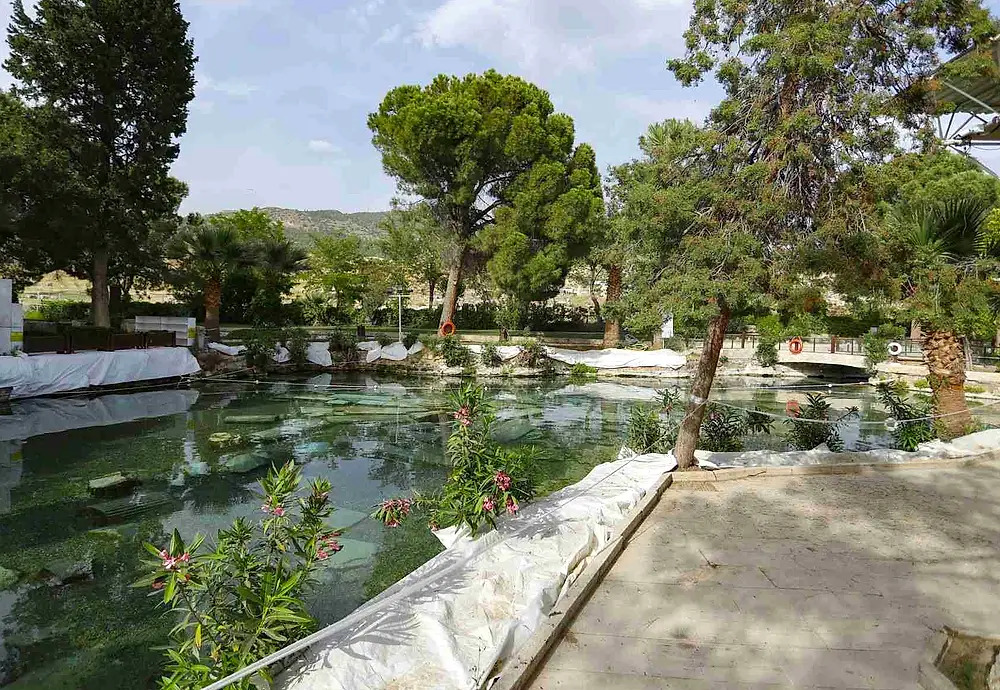
The ancient spa city of Hierapolis above Pamukkale's white travertine terraces, with a Roman grid plan, a Christian martyrium and centuries of earthquake rebuilding.
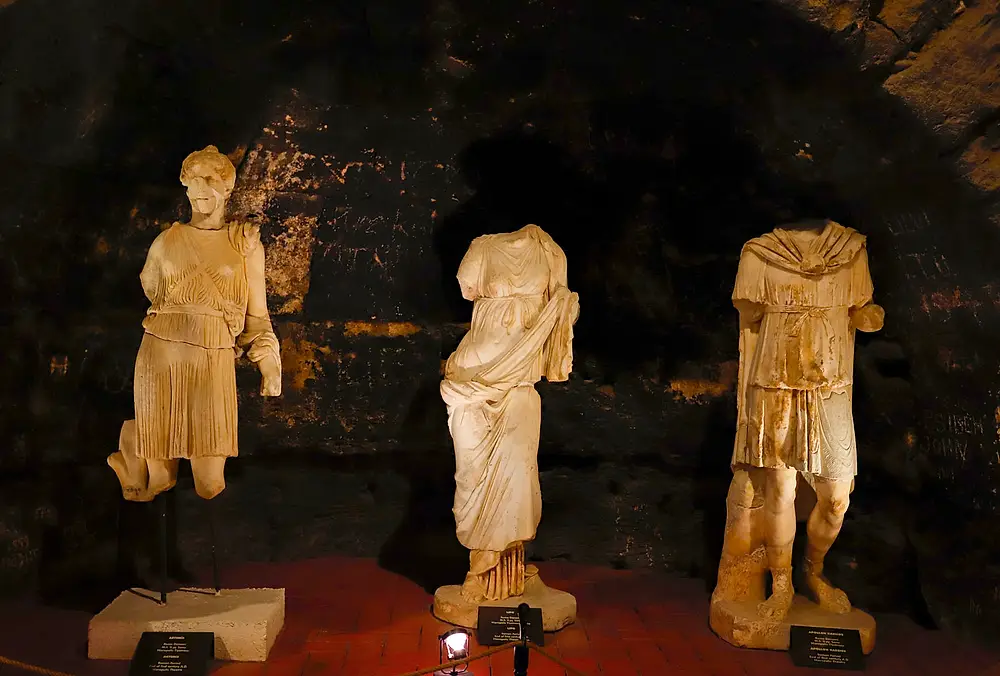
A museum inside Hierapolis's Roman baths, with sarcophagi, statues and reliefs from the ancient theatre, right beside the white travertines of Pamukkale.
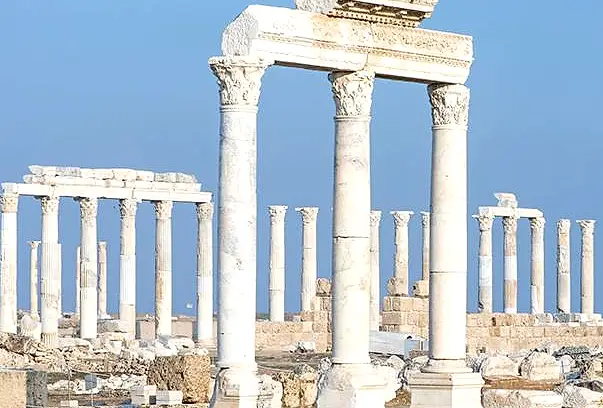
A large Hellenistic and Roman city near Pamukkale with Anatolia's biggest stadium, two theatres and a church counted among the Seven Churches of Revelation.
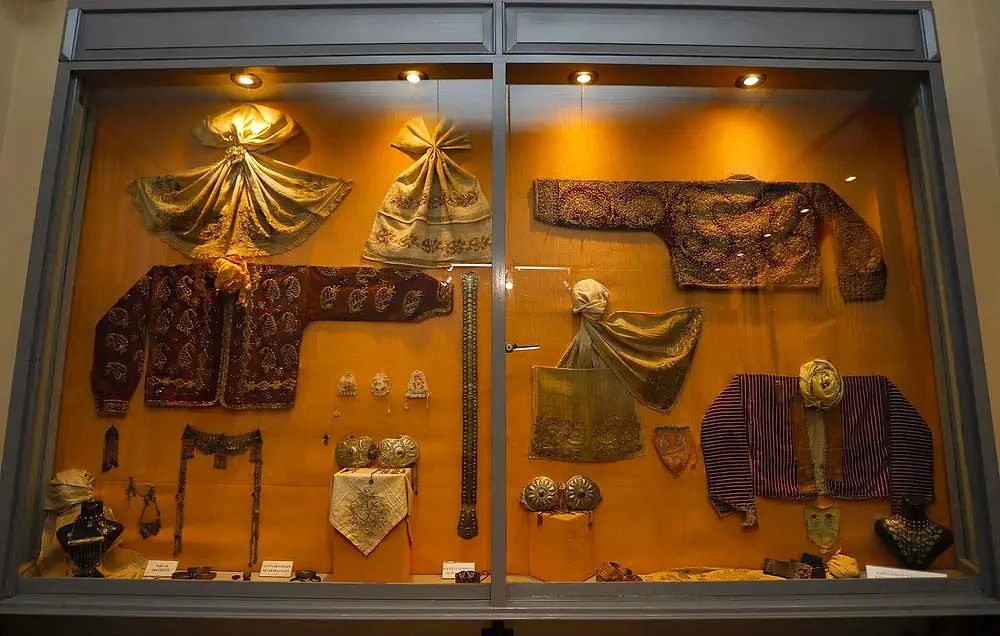
A late-Ottoman Chios-style house where Atatürk spent a night in 1931, now showing local ethnography and Atatürk memorabilia.
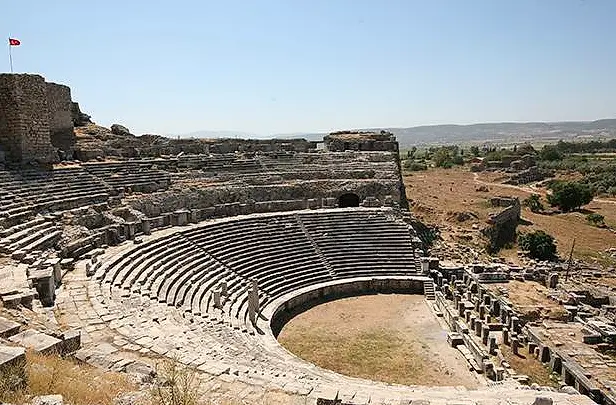
Once a busy Ionian harbour city, Miletus now lies among fields in Aydın, with its great theatre, bath ruins and the Lion Harbour monument still to walk through.
Four Istanbul landmarks, each sold on its own site by the agency behind this guide — dated entry and free cancellation up to 24 hours.
The sultans’ palace on Sarayburnu: courtyards, the Imperial Council, the treasury and the terraces over the water. Dated entry, sold online on its own site.
Justinian’s great underground reservoir: 336 columns in still water and the two Medusa heads. Fast-track entry with a digital audio guide.
Justinian’s cathedral, the sultans’ mosque and a working mosque again today. The ticket admits you to the upper visitor gallery.
A nineteenth-century palace on the water’s edge: the Selamlık, the Ceremonial Hall under its chandelier, the crystal staircase and the Harem.


