
Topkapı Palace
The sultans’ palace on Sarayburnu: courtyards, the Imperial Council, the treasury and the terraces over the water. Dated entry, sold online on its own site.
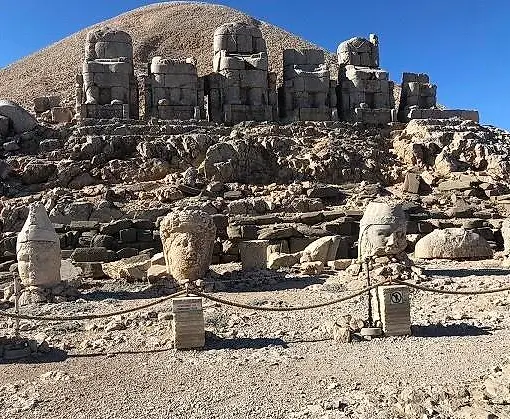
Giant Hellenistic statues of King Antiochos I and his gods on a summit above 2,000 metres in Adıyaman, a UNESCO site famous for sunrise.
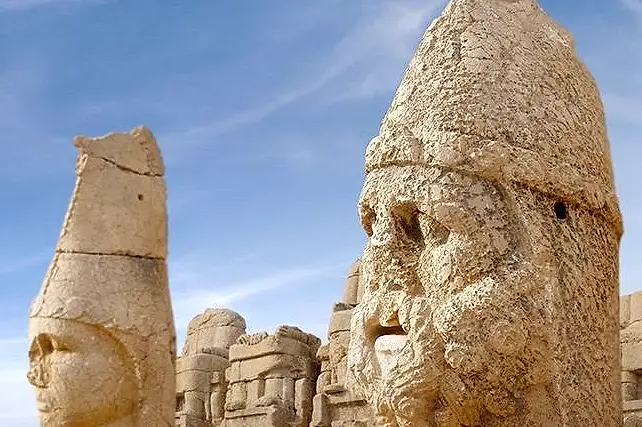
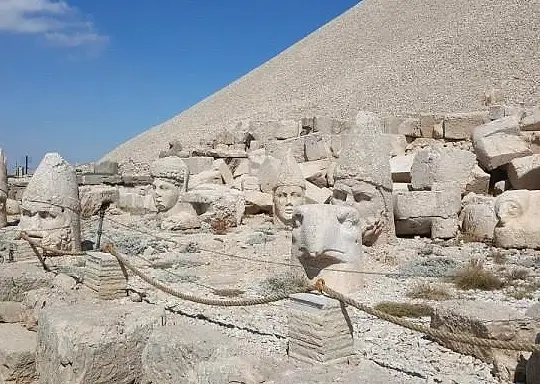
High above Kahta in Adıyaman province, the slopes of Mount Nemrut carry some of the most striking monuments in Turkey. The site rises more than 2,100 metres and spreads across eastern, western and northern terraces. King Antiochos I of Commagene had well-preserved limestone statues, eight to ten metres tall, set up here to honour his gods and ancestors, and the site joined the UNESCO World Heritage List in 1987.
Commagene was an independent kingdom founded by Mithradates I and reached its peak under Antiochos I (62-32 BC), until war with Rome ended its independence in AD 72. Antiochos, of Persian descent on his father's side and Greek on his mother's, mixed both worlds in the monument: Hellenistic and Persian styles blend in the statues, which is why they are often described as a bridge between East and West. After the kingdom vanished, the summit lay quiet for about two thousand years until Osman Hamdi Bey visited in 1883.
The eastern terrace is the sacred centre, where kings and gods sit in rows on thrones of about ten metres, faces turned to the rising sun. Both terraces also have lions and eagles, and the western terrace has a lion horoscope.
According to the Ministry’s listing it opens at 09:00 and closes at 18:00. Open every day.
No. This site sells no tickets. Topkapı Palace, the Basilica Cistern, Hagia Sophia and Dolmabahçe Palace are sold on our sister sites; for Mount Nemrut Archaeological Site, buy at the ticket office or on the Ministry’s official e-ticket system.
Mount Nemrut Archaeological Site is in Adıyaman, Türkiye — Karadut Köyü.
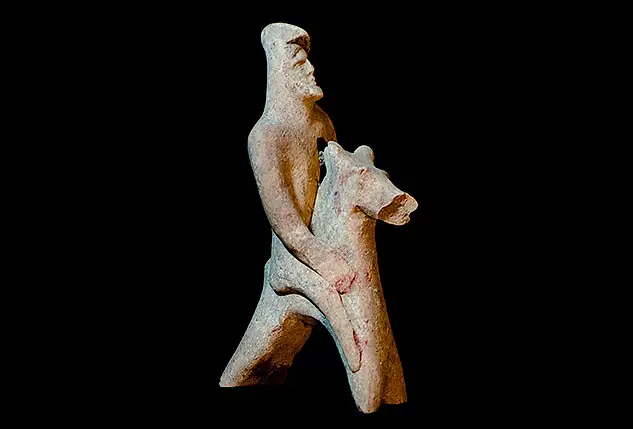
A regional museum of Commagene and the Lower Euphrates, with finds from prehistoric tools to Roman mosaics, plus a garden of stone monuments.
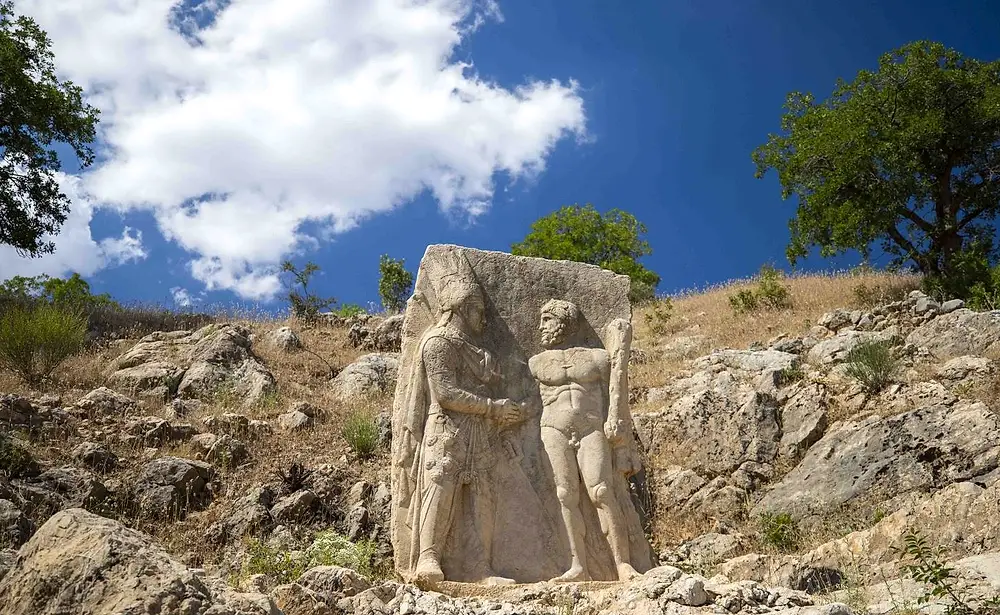
The summer capital of the Kingdom of Commagene, near Kahta: a hilltop with a long Greek cult inscription, a stepped tunnel and rock reliefs of gods and kings shaking hands.
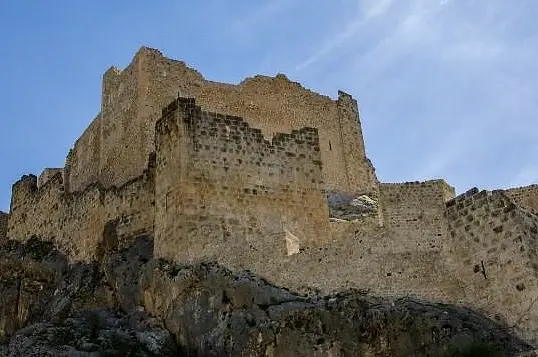
A fortress on a sheer mountaintop near Kahta, with palaces, a mosque, cisterns and a hidden pigeon loft, on the road to Mount Nemrut.
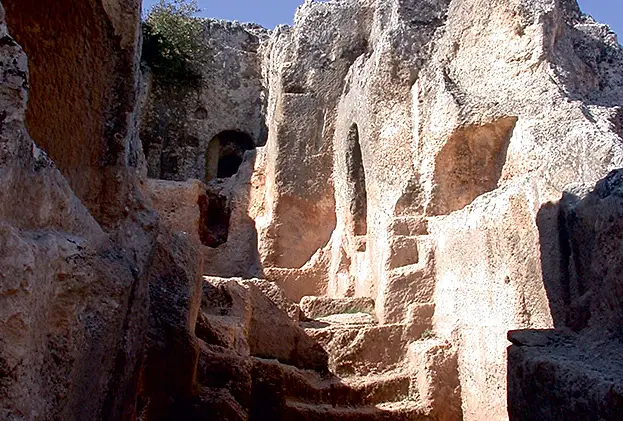
An ancient city of the Kingdom of Commagene, set on a road between Malatya and Samsat, with a necropolis, mosaics and a spring that still draws visitors.
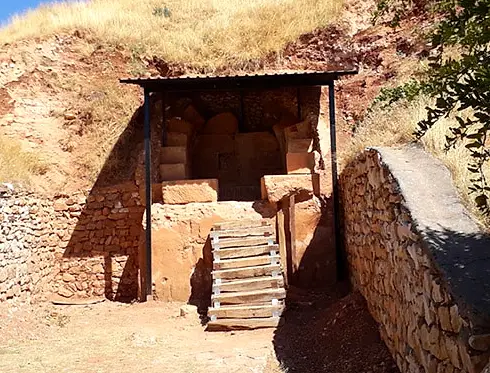
A first-century AD burial mound in Adıyaman with a stone-built chamber, a vaulted corridor and two sarcophagi, hidden under a 15 m earthen tumulus.
Four Istanbul landmarks, each sold on its own site by the agency behind this guide — dated entry and free cancellation up to 24 hours.
The sultans’ palace on Sarayburnu: courtyards, the Imperial Council, the treasury and the terraces over the water. Dated entry, sold online on its own site.
Justinian’s great underground reservoir: 336 columns in still water and the two Medusa heads. Fast-track entry with a digital audio guide.
Justinian’s cathedral, the sultans’ mosque and a working mosque again today. The ticket admits you to the upper visitor gallery.
A nineteenth-century palace on the water’s edge: the Selamlık, the Ceremonial Hall under its chandelier, the crystal staircase and the Harem.


