
Topkapı Palace
The sultans’ palace on Sarayburnu: courtyards, the Imperial Council, the treasury and the terraces over the water. Dated entry, sold online on its own site.
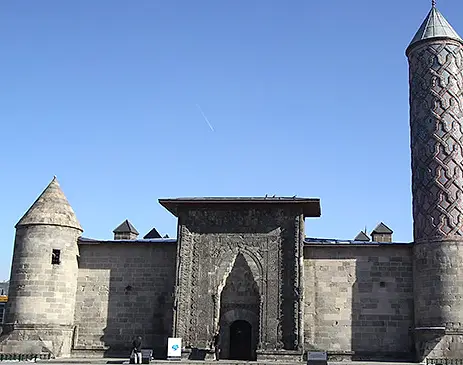
Erzurum's museum is the Yakutiye Madrasa, a 1310 Ilkhanid-era college with a carved portal and tiled minaret, now showing regional ethnography and Turkish-Islamic objects.
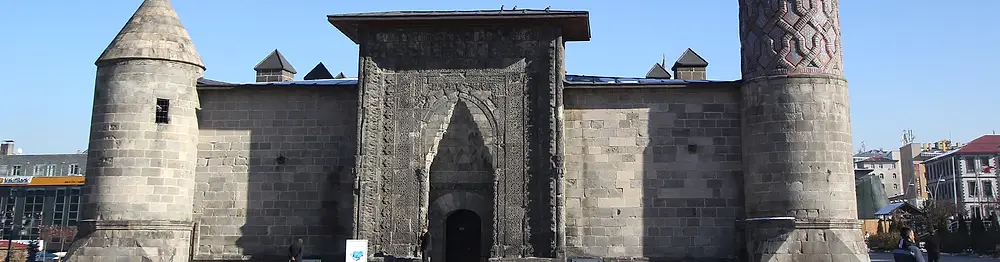
The Turkish and Islamic Arts and Ethnography Museum in Erzurum occupies the Yakutiye Madrasa, and the building is as much the attraction as the objects inside. According to the inscription on its crown gate, it was built in 1310 by Cemaleddin Hoca Yakut Gazani, in the name of Gazan Khan and Bolugan Hatun, during the reign of the Ilkhanid ruler Sultan Olcaytu. It belongs to the group of madrasas with four iwans and a closed courtyard, and it reflects the traditional architectural style of the Seljuk period. It has served as a museum since 1994.
The façade was designed with balance in mind: a projecting crown portal, minarets at both corners and domed tombs set opposite each other. Today one of the corner minarets stands only up to its balcony and the other only to its base, both capped with a conical roof, but the plant and geometric motifs and symbolic figures on the front still show the care taken over symmetry. Tile decoration on the gate and minaret is of exceptional value.
Inside, the ethnographic displays set women's jewellery and clothing beside men's jewellery and accessories, belts, copperware, weapons, seals and coins. They carry the cultural and artistic traces of the region from the past to the present and sit in harmony with the monumental building around them.
According to the Ministry’s listing it opens at 08:00 and closes at 17:00 (last entry 16:30). Closed: Monday.
No. This site sells no tickets. Topkapı Palace, the Basilica Cistern, Hagia Sophia and Dolmabahçe Palace are sold on our sister sites; for Turkish and Islamic Arts and Ethnography Museum, buy at the ticket office or on the Ministry’s official e-ticket system.
Turkish and Islamic Arts and Ethnography Museum is in Erzurum, Türkiye — Karaköse Mahallesi, Yakutiye Medresesi.
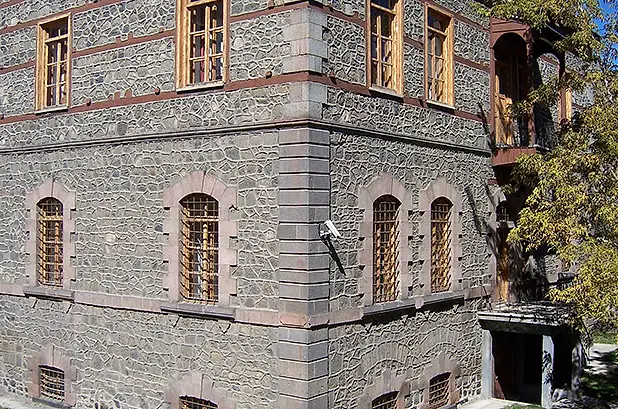
The mansion where Mustafa Kemal and his companions worked for 52 days in 1919, during the Erzurum Congress, now a museum of the National Struggle.
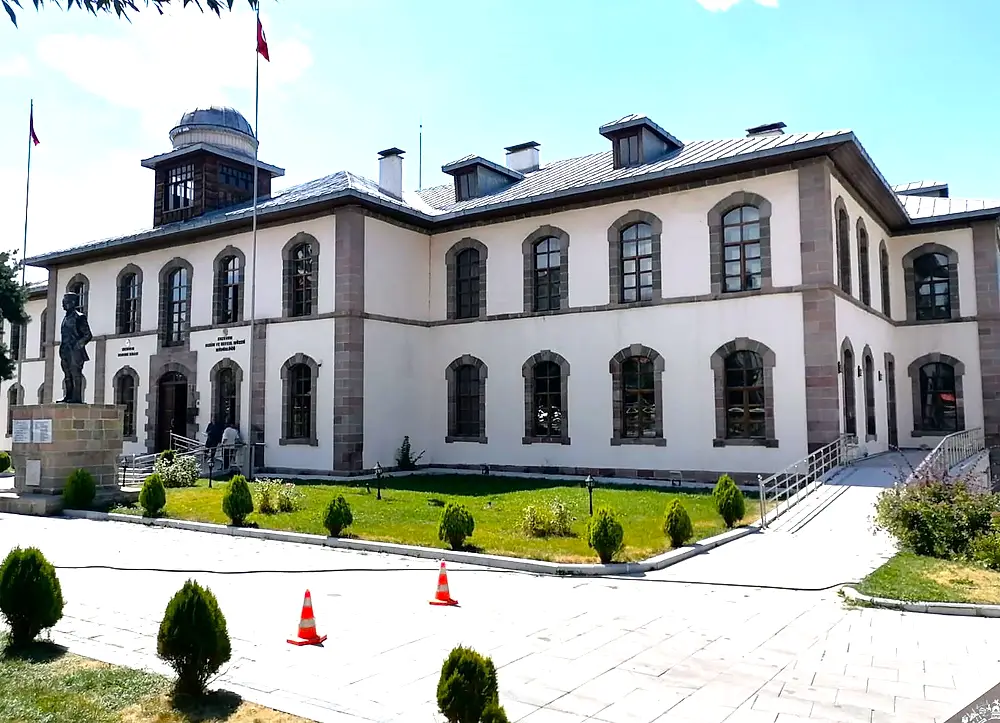
The historic Erzurum Congress building, once an Armenian girls' boarding school, now run as a painting and sculpture museum and gallery.
Four Istanbul landmarks, each sold on its own site by the agency behind this guide — dated entry and free cancellation up to 24 hours.
The sultans’ palace on Sarayburnu: courtyards, the Imperial Council, the treasury and the terraces over the water. Dated entry, sold online on its own site.
Justinian’s great underground reservoir: 336 columns in still water and the two Medusa heads. Fast-track entry with a digital audio guide.
Justinian’s cathedral, the sultans’ mosque and a working mosque again today. The ticket admits you to the upper visitor gallery.
A nineteenth-century palace on the water’s edge: the Selamlık, the Ceremonial Hall under its chandelier, the crystal staircase and the Harem.


