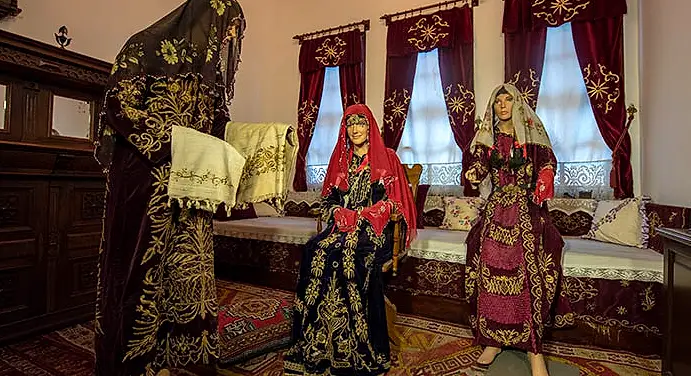

Topkapı Palace
The sultans’ palace on Sarayburnu: courtyards, the Imperial Council, the treasury and the terraces over the water. Dated entry, sold online on its own site.
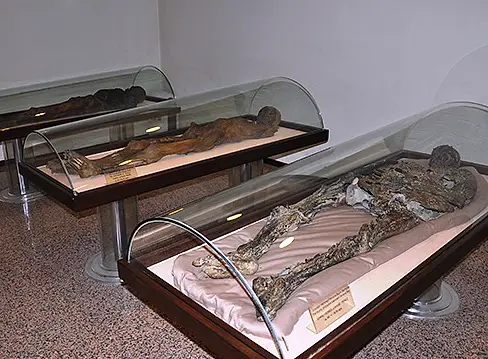
Thirteen civilisations under one roof: from the Late Neolithic to the Ottomans, with a Roman apple mosaic, a bronze Hittite storm god and rare Ilkhanid mummies.
Founded in 1925, Amasya Museum worked from several buildings before moving into its modern home in 1977 and opening there in 1980. Its displays run from the Late Neolithic and Early Chalcolithic through the Bronze Age, Hittites, Urartians, Phrygians, Scythians and Persians to Hellenistic, Roman, Byzantine, Seljuk, Ilkhanid and Ottoman times, thirteen cultures in all.
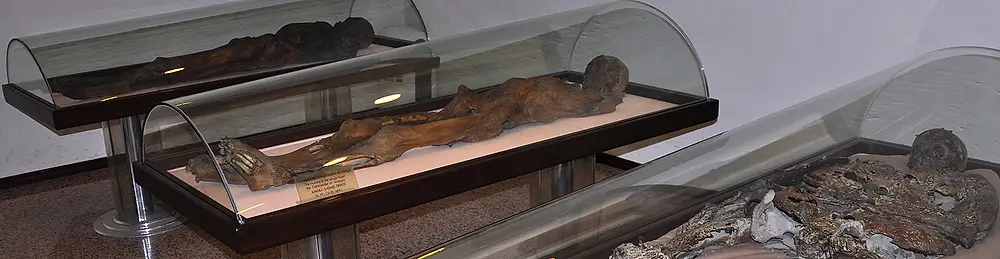
Two things are singled out for visitors. The first is the so-called Apple Mosaic, a floor from a Roman villa, on the first floor. The second is the Mummy Hall, a dedicated room where bodies from the 14th-century Ilkhanid period lie in glass coffins. They belonged to officials and relatives of people who lived in Amasya while the Ilkhanids ruled Anatolia.
Among the other highlights is a bronze statue of Teshub, the Hittite storm god, from the imperial period. In the garden to the west of the building, stone works from Hittite, Hellenistic, Roman, Byzantine, Ilkhanid, Seljuk and Ottoman times are displayed in the open air.
According to the Ministry’s listing it opens at 08:15 and closes at 19:00 (last entry 18:15). Open every day.
No. This site sells no tickets. Topkapı Palace, the Basilica Cistern, Hagia Sophia and Dolmabahçe Palace are sold on our sister sites; for Amasya Museum, buy at the ticket office or on the Ministry’s official e-ticket system.
Amasya Museum is in Amasya, Türkiye — Mustafa Kemal Paşa Caddesi No:91.
Four Istanbul landmarks, each sold on its own site by the agency behind this guide — dated entry and free cancellation up to 24 hours.
The sultans’ palace on Sarayburnu: courtyards, the Imperial Council, the treasury and the terraces over the water. Dated entry, sold online on its own site.
Justinian’s great underground reservoir: 336 columns in still water and the two Medusa heads. Fast-track entry with a digital audio guide.
Justinian’s cathedral, the sultans’ mosque and a working mosque again today. The ticket admits you to the upper visitor gallery.
A nineteenth-century palace on the water’s edge: the Selamlık, the Ceremonial Hall under its chandelier, the crystal staircase and the Harem.


