
Topkapı Palace
The sultans’ palace on Sarayburnu: courtyards, the Imperial Council, the treasury and the terraces over the water. Dated entry, sold online on its own site.
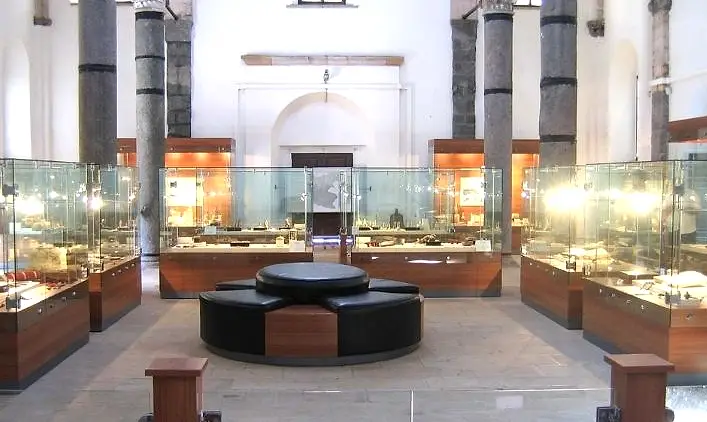
A former Orthodox church near the sea at the foot of Giresun's citadel, restored and opened as a museum in 1988.
Giresun Museum occupies a historic church at the eastern foot of the Giresun citadel, close to the sea. The Orthodox church was built by the Greeks who lived in the region and takes its name from its neighbourhood, now called Zeytinlik, where it was known as the Gogora or Gagara Church.
It served as a church until the 1920s. After the population exchange it was abandoned and left empty until 1948, when it was patched up and used as a prison until 1967. It then sat empty again until 1982, and the damage nearly led to its collapse.
The Ministry of Culture and Tourism restored it between 1982 and 1988, and it opened as a museum in 1988. The rectangular, cross-plan building is made of grey and brown cut stone. It has a hipped roof, and in the middle rises a copper-covered dome on a high drum.
According to the Ministry’s listing it opens at 08:00 and closes at 17:00 (last entry 16:30). Open every day.
No. This site sells no tickets. Topkapı Palace, the Basilica Cistern, Hagia Sophia and Dolmabahçe Palace are sold on our sister sites; for Giresun Museum, buy at the ticket office or on the Ministry’s official e-ticket system.
Giresun Museum is in Giresun, Türkiye — Atatürk Bulvarı No:62.
Four Istanbul landmarks, each sold on its own site by the agency behind this guide — dated entry and free cancellation up to 24 hours.
The sultans’ palace on Sarayburnu: courtyards, the Imperial Council, the treasury and the terraces over the water. Dated entry, sold online on its own site.
Justinian’s great underground reservoir: 336 columns in still water and the two Medusa heads. Fast-track entry with a digital audio guide.
Justinian’s cathedral, the sultans’ mosque and a working mosque again today. The ticket admits you to the upper visitor gallery.
A nineteenth-century palace on the water’s edge: the Selamlık, the Ceremonial Hall under its chandelier, the crystal staircase and the Harem.


